Infectious Diseases in New Mexico

Invalid Access Key! Invalid Access Key!
“China Roundup: Apple closes a 4-year-old App Store loophole - TechCrunch” plus 1 more |
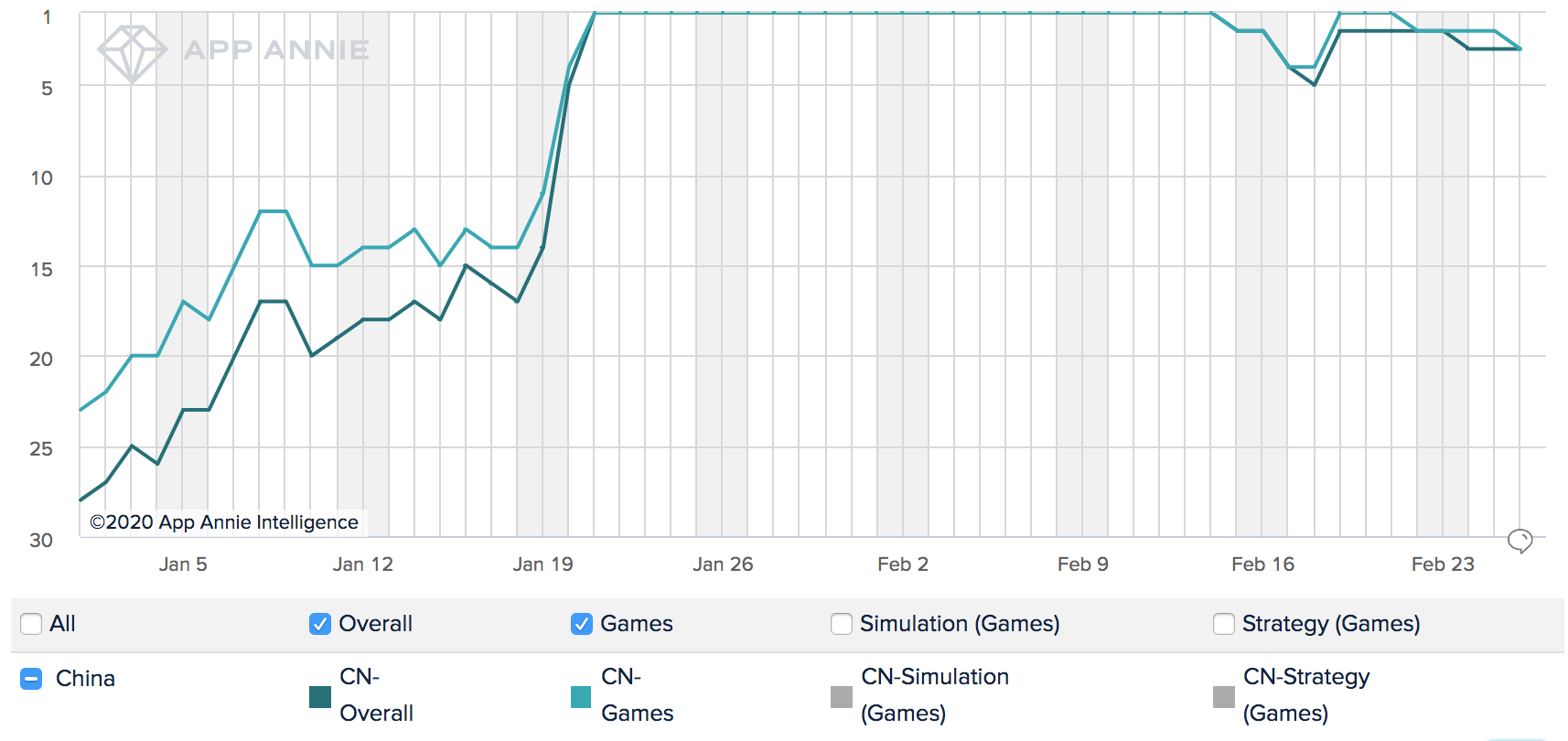
| China Roundup: Apple closes a 4-year-old App Store loophole - TechCrunch Posted: 01 Mar 2020 08:55 AM PST Hello and welcome back to TechCrunch's China Roundup, a digest of recent events shaping the Chinese tech landscape and what they mean to people in the rest of the world. This week, Apple made some major moves that are telling of its increasingly compliant behavior in China where it has seen escalating competition, but investors are showing dissatisfaction with how it is approaching hot-button issues in the country. Virus game gonePlague Inc., a simulation game where a player's goal is to infect the entire world with a deadly virus, was removed from the China iOS App Store this week. Since the outbreak of the COVID-19 coronavirus in late January, Chinese users had flocked to download the eight-year-old game, potentially seeking an alternative way to understand the epidemic. Data from market research firm App Annie shows that the title remained the most downloaded app in China from late January through most of February, up from No. 28 at the beginning of the year.
Ndemic Creations, the U.K. studio behind the game, said in a statement that the "situation" — the removal of Plague Inc. from the Apple App Store — "is completely out of our control." The Chinese government provided an opaque reason for the takedown, saying the game "includes content that is illegal in China as determined by the Cyberspace Administration of China," which is the country's internet watchdog. The incident has gotten plenty of attention in and outside of China. Some speculate that Apple has caved to pressure from Beijing, which could find Plague Inc.'s gameplay troubling. One sticking point is that its tutorial by default picks China as the starting country, although in the main game a user can begin anywhere in the world. The Information reported in 2018 that Plague Inc. actually applied for official permission to distribute in China but was turned down on account of its "socially inappropriate" content. Others including Niko Partners games analyst Daniel Ahmad suggested that the Chinese authority might have taken issue with a December version update that allowed players to create "fake news," which could mislead them in seeking advice in the midst of the health crisis. Ahmad also suggested that the ban might have been linked to the ongoing crackdown of unlicensed mobile games in China. Notably, the Plague Inc. ban coincided with Apple's announcement this week that would require all games in its Chinese app store to obtain government approval in the form of an ISBN number beginning in July. Few details have come to light about what this new regulatory process entails. Nor do developers know whether currently published games without official approval will be removed. Apple investors are not sitting well with the firm's app takedowns in China. 40% of its shareholders cast support for a proposal that would force Apple to uphold human rights commitment and be more transparent on how it responds to Beijing's requests to censor apps. Apple's DelayThe gaming permit requirement is not new, though. In fact, Apple is just closing a regulatory loophole that had existed for years. Back in 2016, the Chinese government stipulated that video games — both PC and mobile — must apply for an ISBN number before entering circulation China. Within months, alternative Android stores operated by domestic tech giants swiftly moved to weed out illegal games. The official Google Play store is unavailable in China. But Apple has managed to keep unlicensed titles in stock in the world's largest gaming market, where content is strictly monitored. The American behemoth has many incentives to do so. Despite iPhone's eroding share in China (to be fair, all Chinese phone makers but Huawei have recently suffered declining market share), iOS apps in China, especially games, remain an important revenue source for Apple. So it's in Apple's best interest to clear hurdles for apps publishing in the country. Where there is a will, there is a way. Prior to 2016, publishing a game in China was relatively hassle-free. Following the regulatory change that year, Apple began asking games for proof of government license — but it didn't go all out to enforce the policy. Local media reported that developers could get by with fabricated ISBN numbers or circumvent the rule by publishing in an overseas iOS App Store first and switching to China later. This questionable practice did not go unnoticed. In August 2018, a Chinese state media lambasted Apple for its lousy oversight over App Store approvals. Stepping up inspection on games will likely have little impact on China's gaming titans who enjoy the financial and operational resources to secure the much-needed permit. Rather, their challenge is devising content that aligns with Beijing's ideological guidelines, exemplified by Tencent's patriotic makeover of PUBG. Those that will be worst hit will most likely be small-time, independent studios, as well as firms that create "sockpuppet games" (马甲包), a practice whereby a developer exploits app stores' loopholes to publish a troop of clones with similar gameplay and mask their appearance with altered names, logos and characters. Doing so can often help the publisher gain more traffic and revenue, but these sockpuppets will have a low chance of passing the authority's strict scrutiny, which, as a Chinese gaming blog speculates, will potentially put an end to the surreptitious practice.  |
| Apple removes Plague Inc. from Chinese app store for 'illegal' content - Best gaming pro Posted: 27 Feb 2020 10:08 AM PST Apple has eliminated the virus-spreading simulator Plague Inc. from its Chinese language App Retailer on the request of that nation's authorities. Developer Ndemic Creations notified gamers of the problem in a blog post today. In that assertion, the studio confirms that one among China's many media ministries made the decision. "We have now some very unhappy information to share with our China-based gamers," reads Ndemic's assertion. "We've simply been knowledgeable that Plague Inc. 'consists of content material that's unlawful in China as decided by the Our on-line world Administration of China' and has been faraway from the China App Retailer. This example is totally out of our management." Plague Inc. originally debuted for iOS in May 2012. It has gamers designing viruses with the objective of infecting each individual on the earth. Over time, it has discovered an enormous viewers of greater than 130 million gamers throughout PC and cell. Ndemic has additionally seen the sport's recognition spike alongside current fears of the coronavirus that spreads COVID-19. "The sport initially launched about eight years in the past and was No. 1 on the iOS App Retailer in 2014," Niko Partners analyst Daniel Ahmad wrote on Twitter. "Since COVID-19 [the coronavirus], the sport has been topping the iOS recreation charts in China and world wide." However Ndemic has no concept if coronavirus fears are the motivation for China's Our on-line world Administration. "It's not clear to us if this elimination is linked to the continuing coronavirus outbreak that China is dealing with," reads the Ndemic assertion. "Nevertheless, Plague Inc.'s academic significance has been repeatedly acknowledged by organizations just like the CDC, and we're at the moment working with main international well being organizations to find out how we will greatest help their efforts to include and management COVID-19." Plague Inc. remains to be out there as regular exterior of mainland China. Plague Inc. is on the whim of China's oppressive media rulesThe Chinese language authorities workout routines full management over how corporations promote media. Regulators do not permit games to generate revenue until they get a license. And ministries only approve games in small batches and primarily from domestic publishers like Tencent. Plague Inc., nevertheless, pre-dates a lot of these rules. It launched in China earlier than the newest license system went into impact in late 2018 and early 2019. However the authorities has principally grandfathered in video games that debuted earlier than its approval program. Plague Inc., for some cause, is completely different. "Plague Inc. appears to be the one 'virus/plague' associated recreation that been taken down up to now," Ahmad wrote on Twitter. "All different video games on this style are nonetheless up, together with video games developed by Chinese language corporations and supported by the Chinese language authorities." So why did China take away it? It's a doable overreaction to coronavirus fears. Or perhaps the federal government doesn't like that the virus in Plague Inc. at all times begins in China. The sport additionally lately added a "faux information" mode that permits gamers to create and unfold misinformation like a virus. However regardless of the cause, Plague Inc. remains to be out there in China on the Steam PC-gaming retailer. That makes the ban much more complicated. Ndemic, in the meantime, says that it's making an attempt to get the sport again on iOS in China. "We're working very laborious to try to discover a option to get the sport again within the arms of Chinese language gamers," mentioned Ndemic. "We don't need to surrender on you. Nevertheless, as a tiny impartial video games studio within the U.Ok., the chances are stacked in opposition to us. Our speedy precedence is to try to make contact with the Cyberspace Administration of China to grasp their considerations and work with them to discover a decision."  Tech specialist. Social media guru. Evil problem solver. Total writer. Web enthusiast. Internet nerd. Passionate gamer. Twitter buff.  |
| You are subscribed to email updates from "plague inc free ios" - Google News. To stop receiving these emails, you may unsubscribe now. | Email delivery powered by Google |
| Google, 1600 Amphitheatre Parkway, Mountain View, CA 94043, United States | |



Comments
Post a Comment