Respirology | APSR Respiratory Medicine Journal

Invalid Access Key! Invalid Access Key!
“Black Death spread four times faster in second London outbreak - BBC Focus Magazine” plus 2 more |
| Black Death spread four times faster in second London outbreak - BBC Focus Magazine Posted: 20 Oct 2020 01:36 AM PDT  The plague spread across London around four times faster in the 17th Century than it had in the 14th Century, a new study suggests. Researchers found an acceleration in transmission between the Black Death of 1348 – estimated to have wiped out more than one-third of the population of Europe – and later epidemics, which culminated in the Great Plague of 1665. As well as the epidemics in the 14th and 17th Centuries, there were 18 other plague epidemics in London between 1563 and 1666, though these were all much smaller outbreaks. They analysed thousands of documents covering a 300-year span of plague outbreaks in the city, and found that, in the 14th Century, the number of people infected during an outbreak doubled approximately every 43 days. By the 17th Century, the number was doubling every 11 days, according to the study published in the Proceedings of the National Academy of Sciences journal. Read more on infectious diseases: David Earn, a professor in the department of mathematics and statistics at McMaster University, Canada, and investigator with the Michael G DeGroote Institute for Infectious Disease Research, led the study. "It is an astounding difference in how fast plague epidemics grew," he said. The researchers, including statisticians, biologists and evolutionary geneticists estimated death rates by analysing historical, demographic and epidemiological data from three sources – personal wills and testaments, parish registers, and the London Bills of Mortality. "At that time, people typically wrote wills because they were dying or they feared they might die imminently, so we hypothesised that the dates of wills would be a good proxy for the spread of fear, and of death itself," said Prof Earn. "For the 17th Century, when both wills and mortality were recorded, we compared what we can infer from each source, and we found the same growth rates. "No-one living in London in the 14th or 17th Century could have imagined how these records might be used hundreds of years later to understand the spread of disease."  "From genetic evidence, we have good reason to believe that the strains of bacterium responsible for plague changed very little over this time period, so this is a fascinating result," said study co-author Hendrik Poinar, a professor in the department of anthropology at McMaster. Researchers suggest the estimated speed of the 14th Century epidemics, along with other information about the biology of plague, indicates that during the plague bacterium did not spread primarily through human-to-human contact, known as pneumonic transmission, in this outbreak. The scientists suggest that the early epidemic was primarily driven by bubonic transmission – that is, through bites from infected insects – and the later epidemic was primarily driven by pneumonic transmission. They believe population density, living conditions and cooler temperatures could potentially explain the acceleration, and that the transmission patterns of historical plague epidemics offer lessons for understanding COVID-19 and other modern pandemics. Could the Black Death happen again?No. Bubonic plague killed at least one-third of the population of Europe between 1346 and 1353. But that was before we knew it was caused by the bacterium Yersina pestis. Bubonic plague does still occasionally occur in small flare-ups of a few dozen cases, but we have antibiotics to treat it now. Plus, better hygiene makes it very hard for a disease spread by flea bites to become a global pandemic again. Read more: Authors Sara is the online assistant at BBC Science Focus. She has an MPhys in mathematical physics and loves all things space, dinosaurs and dogs.   |
| The Black Death: the pandemic that changed the world - In Defence of Marxism Posted: 12 Oct 2020 12:00 AM PDT The Black Death of the 14th century dealt a mortal blow to the feudal system, which was decaying even before the plague hit. Similarly today, the COVID-19 pandemic has revealed the bankruptcy of capitalism – and the need for socialism. The present COVID-19 pandemic is a truly world-changing event. Its rapid and deadly spread has ruthlessly exposed governments, strained health services to breaking point, and triggered the deepest crisis of capitalism since the 1930s – if not ever. Around the world, people's lives have been altered beyond recognition. As the initial shock begins to subside, an enormous wave of anger and revulsion has begun to break against the capitalist system and its institutions. Everywhere there is a profound sense that things will never be the same again. In the face of such events, commentators have naturally sought historical analogies for the period we have entered. For many, the closest comparison can be found not in modern times, but in the deadly plague that swept Europe and Asia in the 14th century, killing more than a third of Europe's population: the Black Death. This analogy is highly significant – not because there is a parallel between today's pandemic and the plague's biological effects, but because of the tremendous social consequences of the plague. The Black Death is considered the worst natural disaster in European history. But the impact it had on society went far beyond the 14th century. The processes which were unleashed or accelerated by the plague's devastation would in time completely change social relations, eventually laying the foundations of modern Europe. A closer examination of the Black Death – and the impact it had on feudal society – is not an academic exercise. For all the important differences between the 14th and the 21st centuries, they have one thing in common: both are times of transition, in which an old, rotten order begins to crumble whilst new social forces struggle to be born. Josh Holroyd will be speaking about the topic of the Black Death at this year's Revolution Festival, taking place between 23-25 October. Get your ticket today – and join the revolution! What was the Black Death?What became known as the Black Death was a pandemic caused by deadly strains of yersinia pestis bacteria, which live in the bellies of the fleas carried by various rodents throughout Asia and Africa. Between 1347 and 1351, this pandemic swept along the trade routes of the Silk Road into China, the Middle East and Europe, killing millions of people. It would return periodically on a reduced scale well into the 18th century. The most famous of these strains was the bubonic plague, so-called because of the round, black buboes formed by the swelling of the victim's lymph nodes. Up to 60% of those who contracted the disease died as a result. This strain can still be found alive and well in parts of China to this day, with a suspected case of bubonic plague reported in Inner Mongolia as recently as July. Even deadlier was pneumonic plague, which was passed in the air from person to person and proved fatal in at least 95% of cases. Finally, septicaemic plague – caused by the infection of the blood – was much less common, but always fatal. What is not so well known is that the Black Death's arrival in the 14th century was in fact the second time the plague had visited Europe. The first pandemic struck the Eastern Roman Empire in the 6th Century, as the Emperor Justinian was trying to reconquer the West. It is thought to have killed roughly half of Europe's population at the time, contributing both to the decline of the Roman Empire in the East and the European Dark Ages. It is interesting to note how closely the arrival of both pandemics coincide with two of the greatest turning points in European history: the first with the decline and fall of the Roman Empire; and the second with the decline of feudalism. Without question the death and panic wrought by the plague would have shaken society to its very foundations, psychologically, politically and economically. But to understand the transformation which took place in European society following the arrival of the Black Death, we cannot look at this factor alone. It is necessary to understand how society was organised in the 14th century; and how the immense external shock of the pandemic interacted with its internal dynamics. Society in 1347
The first thing to bear in mind when considering European society in 1347 is that it was organised on a completely different basis to the urban capitalist society of today. The overwhelming majority of the population (up to 90% in England) lived and worked in the countryside. The basic unit of society was not to be found in the factory or the town – although increasingly prosperous medieval towns certainly did exist, but in the feudal manor. The manor was essentially a village, in which peasants rented land from the 'lord of the manor' in return for a portion of their product, and forced labour services on the lord's 'demesne', which was the land he held directly. This form of exploitation, called serfdom, formed the foundation upon which the entire feudal system rested. Under feudalism, the most powerful class in society was not the bankers and industrialists who rule society today. The industrial bourgeoisie didn't really exist at this stage. The closest thing to it was the craftsmen of the guilds, who lived and worked in the cities. Banking existed only in a very primitive form. The merchants were the most powerful and influential layer of the bourgeoisie. But the swashbuckling Golden Age of the merchant capitalist had yet to dawn. The ruling class was made up of the military feudal nobility and the church: "the ones who fight" and "the ones who pray". But aside from praying and fighting, the nobility also owned almost all the land, except for the common lands like forests, etc. As the holders of the most important means of production at that time – the land – the priests and nobles naturally held a monopoly over the political, intellectual and spiritual institutions of society. There was no working class as we would recognise it today. The workers either worked for themselves; or were unfree peasants who worked for the lords, called 'serfs', after the Latin 'servus', meaning slave. Instead of the struggle between wage workers and their bosses over pay, hours and conditions, the class struggle in the feudal countryside was fought mainly by the serfs, who were striving for freedom from forced labour and for lower rents. This system, as antiquated as it appears today, nonetheless played a progressive role in the lifting of Europe out of the Dark Ages. Between the 10th and 13th century, the population of Europe roughly trebled to around 80 million – the highest it had been for almost 1,000 years. Having almost disappeared during the Dark Ages, internal trade within Europe had begun to re-emerge, along with the medieval towns and the bourgeoisie. Meanwhile, foreign trade with Africa and Asia was flourishing again. In a bitter twist of fate, it would be this extension of trade that caused the plague to spread so rapidly into and across the continent. Limits of feudalism
No social system, however, is capable of perpetually developing society. At a certain stage, social relations that have served to stimulate progress and development are transformed into fetters on further development. Feudal society had reached this point even before the plague struck. By the beginning of the 14th century, the feudal system had reached its limits. The expansion of agriculture into virgin land – which had driven production and population growth in the previous period – had come to an end. The food surplus thus began to shrink relative to population. The productivity of labour could not keep up, held back by the restricted production of the manor and the voracious consumption of the lords. The peasant majority was getting poorer and poorer while the lords were pressing harder. A terrible Europe-wide famine – considered the worst in European history – hit in 1307, killing 10-25% of the population. Worst still, the peasants were running out of land. With no more virgin land, some sons were left without an inheritance, depriving them of a livelihood and paving the way for a deep social crisis. Robert Gottfried, in his book, The Black Death, remarks:
These lines are reminiscent of what Marx and Engels wrote in The Communist Manifesto: that society can no longer live under the bourgeoisie, "because it is incompetent to assure an existence to its slave within his slavery". The old order was already sick. The plague gave this sickness a tangible and horrific expression. The plague hits
The plague is thought to have first emerged in the Gobi desert in the 1320s. Carried by the Mongol traders and horsemen all over Eurasia, it came to China in the 1330s and killed roughly a quarter of the population. It then spread West, with one chronicler claiming: "India was depopulated; Tartary, Mesopotamia, Syria, Armenia were covered with dead bodies; the Kurds fled in vain to the mountains." As with today's COVID-19 pandemic, the first European country struck was Italy. Genoese merchants – trading along the coast of the Black Sea – unwittingly picked up the plague and transported it home, as well as to the rest of the Mediterranean. From here, it spread rapidly across both Christian Europe and the Muslim world. Cairo was one of the largest cities in the world at the time and was hit particularly hard. At the peak of the pandemic, the daily death toll in Cairo reached as high as 7,000. The shortage of coffins meant that many people were buried in mass graves, in scenes similar to those witnessed in New York earlier this year. The famous polymath and historian, Ibn Khaldun, who lost both of his parents to the plague, wrote at the time:
By the end of the pandemic, 200,000 people had died of the plague in Cairo alone – more than the total population of almost every Christian city at the time. So great was the scale of the devastation that both in the West and the East many cities would not recover their pre-plague populations until as late as the 16th century. Despair
It is not difficult to imagine the horror and despair that gripped society at the onset of such apocalyptic scenes, which seemed to descend upon humanity from out of nowhere. None of the usual practices for avoiding and treating disease – such as bathing – provided any defence against the plague. The medical profession found itself completely impotent against the spread of the disease. The plague also served to expose the institutions of the church, whose spiritual protection had proven completely ineffective against a calamity which many took to be a clear sign of God's wrath. There were many cases of local priests fleeing in order to escape the plague, leaving their flocks untended, and without even the solace of their last rites. This provoked a widespread mistrust and questioning of the established church – although not of Christianity or religion as a whole – and gave birth to many new religious movements. One such movement was that of the flagellant sects, which spread across Europe and was particularly strong in the German and Dutch speaking world. Flagellants would roam from town to town in bands of 50 to 300 for 33-and-a-third days, symbolising Christ's time on Earth. During that time they were forbidden to speak, wash, or sleep in soft beds. And upon their arrival in a town they would kneel on the ground and whip themselves in penance for the sins of mankind, in the hope that this would bring an end to the plague. In the early stages of this movement, the arrival of a band of flagellants was often welcomed gladly by the inhabitants, who saw them as offering a genuine spiritual defence against the plague – as opposed to the established church, which was widely discredited. However, as time went on, the movement began to splinter along class lines. Under the influence of the poor masses who swelled its ranks, the movement began to assume the form of a sort of revolutionary sect. Many flagellants believed that the old Holy Roman Emperor, Frederick Barbarossa, would be resurrected, drive out the clergy, and force the rich to wed the poor, following which Christ himself would return to the Earth. These ideas repelled first the nobles, then the more respectable bourgeois, and eventually even the better off peasants. In time, the movement was reduced to the poorest and most destitute layers of society. Once isolated, the remaining flagellants were later crushed by the state. Another product of the despair that arose during the plague was the wave of pogroms against Jews throughout Europe, which assumed horrific proportions in this period. In many places, particularly the towns, Jews were implausibly charged with deliberately spreading the plague or poisoning the wells. Thousands were massacred as a result. The Church and feudal authorities actually took small steps to protect Jews, dismissing the allegations against them. But this did little to stem the tide of bloodshed. Eventually, this provoked a large migration of Jews, fleeing persecution to the East and Poland, in particular, where they were invited to settle by King Casimir III. Economic crisis
In addition to the profound psychological and moral crisis inflicted by the plague, the feudal economy was brought to a standstill. This proked an intense and long-lasting crisis for the ruling class that would have important ramifications. A good indicator of the scale of the crisis can be found in England, where the plague first arrived in September 1348. At Cuxham Manor, near Oxford, owned by the prestigious Merton College, the dramatic fall in population left the college's lands without anyone to work them. This caused a widespread drop in rents, hitting the manor's income. At the same time, wage workers had to be brought in to work on the demesne for high wages. This double blow – in the context of falling demand and prices for staple food crops such as wheat – permanently slashed the manor's 'profits'. These fell from an average of £40 per year, up to 1349, to less than £11 in 1354-55, the first year after the Black Death in which any profits at all were recorded. Overall, the income of the feudal aristocracy across England is estimated to have fallen by more than 20% between 1347 and 1353. Along with the collapse of the manorial system, the high death rate also left many noble families bereft of male heirs, meaning that many formerly great families simply dwindled away to nothing. The deep crisis of the ruling class was accompanied by the beginnings of what would become known as the 'Golden Age of the Labourers'. In 1349, wages doubled on many estates. At Cuxham Manor, a ploughman was paid 10 shillings, 6 pence in 1350 for work that would have earned him only 2 shillings in 1347. Lowly day labourers even enjoyed lunches of "meat pies and golden ale" in addition to their higher wages. But it was not only the labourers who gained, provided they survived the plague; the crisis prompted drastic changes in the conditions and rights of the peasantry as well. The widespread availability of land and low rents meant that peasants were more mobile than perhaps they ever had been. It became possible for peasants to effectively 'shop around', leaving their lords behind in favour of others who offered lower rents and fewer restrictions. Serfdom in this context was both impossible and absurd. Reaction and revolution
Unsurprisingly, the ruling class acted swiftly in order to try to return to the old 'normality'. In 1349, Edward III introduced a Statute of Labour, which purported to fix wages at their pre-1348 level, to no avail. Knowing full well on which side its bread was buttered, the Church joined the landlords' crusade against the labourers' pies and ale. In 1350, the Archbishop of Canterbury issued his effrenata cupiditas, denouncing the greed of those who charged extra for ordinary services. Such an obvious and transparent clash of interests between the lords and the ordinary peasant masses was bound to provoke an immense backlash. The peasants and labourers were realising to a greater and greater extent that the lords were little more than parasites that existed only to consume their labour. They had no intention of relinquishing the gains they had made in those unspeakable plague years. On the other hand, the ruling class could not tolerate this state of affairs. Not only were rising wages and falling rents leaving them out of pocket, but the lifting of many of the restrictions and forced labour services from the shoulders of the peasantry threatened more than just their manor accounts – it threatened to overturn the whole social order, at the top of which they perched. For decades, the ruling nobility had resentfully tried to claw back the gains won by ordinary people and resurrect serfdom. In England, the king introduced the infamous Poll Tax in 1377, which imposed a levy on every adult in the kingdom. This levy was raised two more times, in 1378 and 1381, placing such a heavy burden on peasant families that many accused the king of trying to restore serfdom. The radical preacher, John Wycliffe, condemned the tax, declaring, "In this manner, the lords eat and drink poor men's flesh and blood." In 1381, peasants in Essex refused to pay the tax, thus sparking the Peasants' Revolt. A wealthy peasant named Wat Tyler led an army to London declaring "kill all lawyers and servants of the king". Another leader of the revolt, an unemployed priest called John Ball called for "everything to be common, and that we may be all united together and that the lords be no greater masters than we be". He preached to the rebels:
This egalitarian spirit would later be taken up by the Diggers of the English Revolution, the most radical section of Cromwell's revolutionary forces. When the rebels reached the Thames at Southwark, the London masses lowered the bridge and helped them to take the city. This was an early example of the alliance between the bourgeoisie and peasantry that would play such a vital role in the English and French revolutions. Having captured the Tower of London, the rebels even beheaded the hated Archbishop of Canterbury. The rebels then proceeded to sack the luxurious residences and palaces of the nobility along Fleet Street. But they stole almost nothing from the vast wealth of their enemies, declaring themselves to be "zealots for truth and justice, not thieves and robbers". Instead, the furniture and jewels of the ruling class were cast into the river or burned to the ground. The young King Richard II was forced to concede to the rebels' demands, promising the end of serfdom, cheap land, and free trade. But once the rebels were satisfied and on their way home he had them slaughtered. Despite the fact that the uprising itself was ultimately defeated, serfdom never returned to England. And no poll tax would be collected in England again until Thatcher's ill-fated experiment in 1989 – with similar results. Transition
The significance of the Peasants' Revolt cannot be understated. The end of serfdom effectively spelled the end of feudalism. The old order was dying, but a new order had yet to be born. This was a period of transition; a "time of monsters" as Gramsci put it. And there have been few things in history as monstrous as the Black Death. The developments which had been intensified and accelerated by the Black Death continued to transform society throughout the 14th and 15th centuries. The late Middle Ages became the epoch of the wealthy independent peasant. Meanwhile, the defunct and decrepit feudal nobility continued to exhaust itself in the Wars of the Roses. Gradually, the old feudal dynasties were replaced by a new class of landlords – often merchants who had bought their way into the nobility, who were much more focused on making money than the farcical chivalry of their predecessors. At the level of the state, the various bureaucratic and clerical functions that had largely been carried out by priests prior to the plague were increasingly taken over by a rising class of educated bourgeois, lawyers, etc. This new relationship between the feudal monarchy and the town-dwelling bourgeoisie only grew stronger as the monarchy became more centralised and dependent on funds from wealthy merchants, like the de la Pole family in Hull. These changes, which proceeded gradually, would eventually give birth to the absolutist monarchy of the Tudor period. This would play an important role in the development of capitalism. In the 16th century, the lords would get their revenge over the free peasants and well-fed labourers of England. But there was no return to the old order of 1347. Rather than forcing the peasants to work for them, the new class of landlords forced the poorer peasants off their lands altogether, and turned their fields into pastures worked by wage labourers for the wool market. This violent revolution in the countryside gave birth to capitalist farming. At the same time, it created a class of propertyless paupers, who would eventually be driven into the workshops and factories of the Industrial Revolution to become the modern working class. Today
The parallels between the Black Death and today are striking. The deadly impact of the COVID-19 pandemic – although still shocking – has thankfully not been as great as that of the Black Death. Nevertheless, both pandemics struck social systems that had reached their limits, and opened up crises that threatened to topple the existing order. The Black Death did not cause the crisis of feudalism, which had begun decades before yersinia pestis escaped the Gobi desert. Likewise, COVID-19 has not caused the present crisis of capitalism. Both, however, were enormous external shocks, which served to expose and intensify all the contradictions that had been developing under the surface of society. They were both historical 'accidents' that gave a powerful expression to the necessary sweep of history. But the similarities do not end there. As in the 14th century, the ruling class will do everything it can to build its recovery on the backs of the working class through austerity and repression. But, as in the 14th century, mass uprisings against this onslaught are also inevitable. There can be no return to 'normal'. As before, the old order is dying and dragging humanity down with it. But today, a new order is ready to supplant the old, and is struggling to be born. The struggles erupting today – like that of Black Lives Matter – are the early tremors of the revolutionary rising of the working class. The workers of today are the descendents of the peasant rebels of 1381, who won their freedom only to have it snatched from later generations. In the fight against capital, we inherit their struggle to fulfil the vision of John Ball – that there be no lords or masters, and for all to live free and equal. This time we will finish it. Originally published 9 Oct at socialist.net |  |
| La Pestilenza: True Story of ‘Black Plague’ of 1348 - The Standard Posted: 29 Oct 2020 11:00 PM PDT 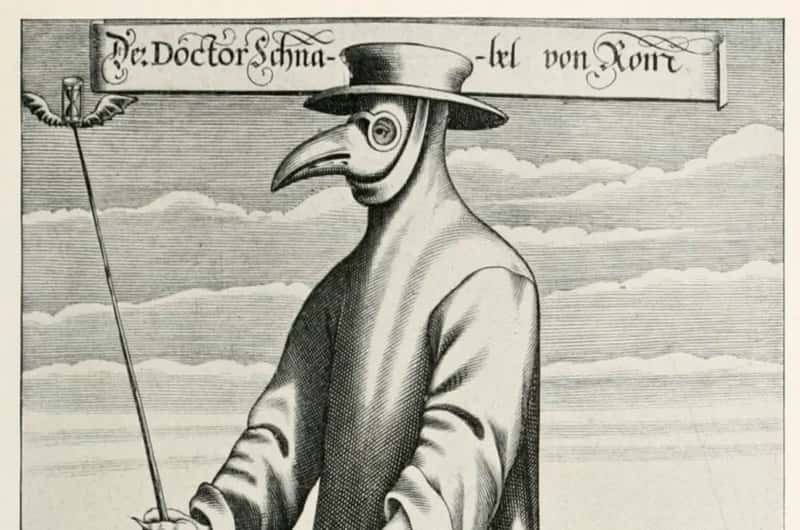 However bad things are, they can get infinitely worse. And in Venezia, starting at the Ides of March as indeed they would across Europe for the next four years, they'd get so bad that most of those who survived would wish they were dead. For with the floods and the famine, the returning traders had bought something bad within them from the Black Sea. It started with their having a continuous dry cough that wouldn't stop. They'd cough and sweat till they spit blood and phlegm, and because this was la contagion, everyone around them was also coughing and spitting and shaking like a leaf. Soon, the entire city was heaving under a great racking of chests and breasts; and groaning with grief as people began to drop dead like flies in every household within two or three days of being taken ill. Out on the streets, the narrow alleys and the wooden bridges that served as footpaths for the crowds, the corpses began to pile up in their numbers. Read MoreBecause the breath, spittle, sweat and sh*te of the sick was so gross and disgusting and stank to the high heavens, relatives began to flee the roofs under which close and loved ones were dying, with more callous types dropping their dying bodies out of the home under cover of darkness, abandoning them to the fate of perishing alone and scared on the filthy streets. Oh Venice. At first the Doge of Venezia, Antonio Cuomo, was too stunned to say or do anything; but after a fortnight, with the disease now on his palace doorsteps, he roused himself and ordered the streets cleared of refuse, and the sick taken out of the city walls to be tended to in the shade of the city walls by priests, nuns, medical men, magi, magicians and other saintly sorts - frontline workers of the kind one finds every time a pandemic breaks out in any corner of the planet, in any given age, whether gilded or accursed, and causes panic and pandemonium. But that was just the first wave of the pestilence that was raining down on Europe,and that would, in the fullness of time, kill one of every two people alive on the Medieval continent. Something slimy and insidious had been breeding inside the vermin that had stowed away on the ships for the free ride from the port of Azov to the seaside cities of Venice and Genoa. And in early May, as the rodents poured out in their millions to feast on the free human flesh festering on the city streets, the fleas on them leaped out in all their joyous fury onto humans. 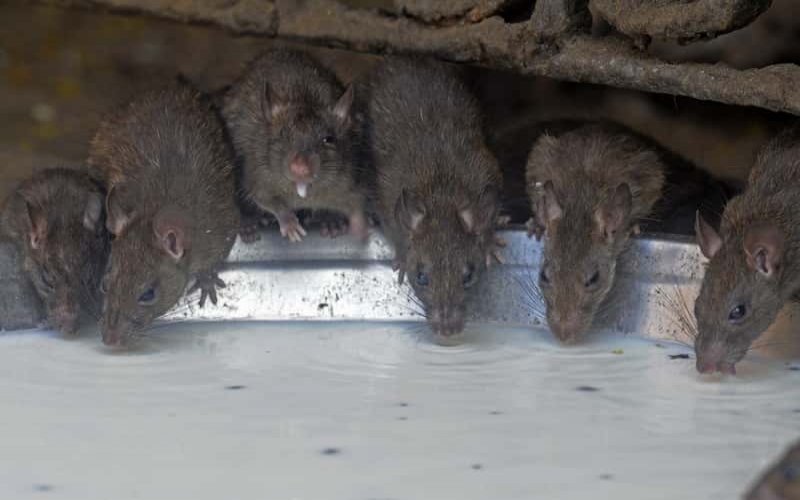 People who had only seen the pneumonia phase of La Pestilenzia now began to experience subcataneous hemorrhages beneath the skin, these leading to blood-filled buboes that the Italians called 'gavoccioli.' Symptoms of the Bubonic plague Sometimes these gavoccioli may suppurate and burst into disgusting boils of pus, leaving the survivor disfigured for life but at least still alive (as happened to the teenage doe-eyed daughter of the Doge, who had been said to be the 'most beautiful young woman in Venezia' (and possibly all of Italia)). She would spend the rest of her mercilessly long life under a veil of silence in a distant convent in Cremona, her face never feeling the touch of sun again until the day she was set to flame in the first primitive crematorium of the 15th century (as a local legend sprang about her as a vampire nun, thanks to her shadowy existence and longevity). A film called 'Suor Omicidi' would be made from her legend, 666 years after her death. For most folks, though, it would be a horrible immediate end - with blood oozing out of nose, eyes, ears (and other orifices) within five days, tops, from ruddy health to bed to rude death. People took to religion with a fervour as high as their pneumonia fevers, walking the streets in processions that observed absolutely no social distancing as they beat their chests and heads, and wailed for God, Mary and Jesus to pardon them their sins; and spare them and their children from La Pestilenzia. Others became fatalistic, especially in the wealthier areas of Venezia, raiding the wine cellars of their departed jiranis and gathering in groups to drink and make merry with the jaded and cynical angst of those with nada to live for: 'e la fine del Mondo.' (it's the end of the world),' they said.  |
| You are subscribed to email updates from "what was the black plague" - Google News. To stop receiving these emails, you may unsubscribe now. | Email delivery powered by Google |
| Google, 1600 Amphitheatre Parkway, Mountain View, CA 94043, United States | |





Comments
Post a Comment