Bilateral Chronic Cavitary Pulmonary Aspergillosis in a Patient With Mycobacteria Other Than Tuberculosis (MOTT) Infection: A Case Report

Invalid Access Key! Invalid Access Key!
“Death Penalty Makes a Comeback in US as Racial Disparities Persist - The Globe Post” plus 1 more |
| Death Penalty Makes a Comeback in US as Racial Disparities Persist - The Globe Post Posted: 01 Aug 2019 12:44 PM PDT 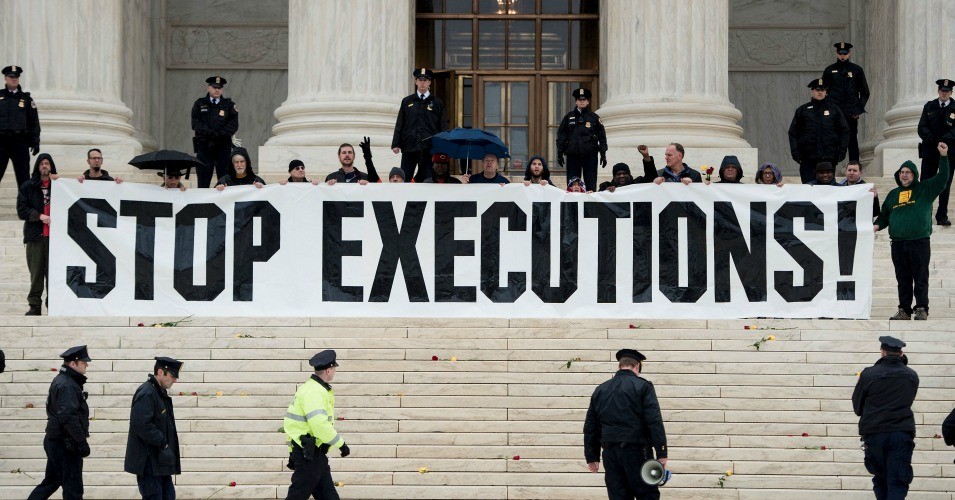 After a 16-year hiatus, the federal death penalty has been reinstated. But during its suspension, the government failed to address the deep-rooted racial inequality within the system, which experts say is the direct descendant of policies from the eras of slavery, Jim Crow, and segregation. Last week President Donald Trump's Attorney General William Barr announced that the federal government would restart executions, despite push back from human rights groups. The first five men who will face federal execution since 2003 are all convicted of murders involving children. Federal executions were on pause for almost two decades because of issues with the cocktail of drugs used to end prisoners lives. The three-drug combination, which included a sedative, a paralytic, and finally potassium chloride to stop the heart, was challenged in court by prisoners on death row after it had caused visible pain in past executions. Further, the company that provided one of the drugs stopped manufacturing it following pressure from human rights groups. But in his announcement Barr said the federal government will be switching to a new one-drug method, which has already been used by 14 states in over 200 executions. Despite the new method of execution, Barr failed to address the many other failures within the death penalty system such as the well documented racial inequality within every stage of the capital punishment process and the criminal justice system as a whole. Minorities And The Death PenaltyThe most telling statistic when talking about discrimination in capital punishment is the race of the victim and how the courts' attitudes change when the victim is white versus when the victim is a person of color, said Robert Dunham, the executive director of the Death Penalty Information Center. Race of the victim plays a significant role in whether the death penalty is pursued by jurors. In Alabama, fewer than five percent of murders involve a black defendant and a white victim, yet over half of black death row prisoners have been sentenced for killing someone who is white. In Louisiana, the odds that a defendant will receive a death sentence are 97 percent higher if the victim was white. "Black lives don't matter as much to prosecutors when they make the decision whether to pursue the death penalty, so cases with black victims tend not to be capitally pursued," Dunham said to The Globe Post. The make up of the jury also plays an important part in who is sentenced to death. A study in Alabama showed that eight out of 10 black people eligible for the jury will be dismissed by the prosecutor in death penalty cases. And more than 23 capital case decisions in the state have been reversed because it was proven that prosecutors illegally removed black people from the jury. Currently, around 42 percent of people on death row are black, meaning that people are often not judged by a jury of their peers, but rather a group hand-selected by the prosecutor. "Study after study, jurisdiction after jurisdiction, show that prosecutors tend to exercise their discretionary strikes to remove African Americans from juries," said Dunham. "And that makes a huge difference when it comes to deciding whether somebody is guilty and what they're guilty of, and even more of a difference when it comes to deciding whether they should live or they should die." Another important factor in whether someone is sentenced to death is the quality of legal representation they have. Death penalty cases deal with one of the most complicated areas of law, leaving a lot of room for legal errors to occur, said Jeffrey Kirchmeier, a law professor at City University of New York. "Supporters of the death penalty like to believe that only the worst killers get the death penalty. But there are numerous arbitrary factors that affect whether or not someone gets the death penalty," Kirchmeier told The Globe Post. History of The Death PenaltyThe death penalty "is a direct descendant of policies of slavery and lynching and legal segregation," according to Dunham. "That meant that the death penalty was part of a legal scheme designed to foster and tighten social control by white men." Capital punishment was a legal way for the courts to continue their campaign of oppression against African American people after the U.S outlawed slavery and lynching, said Dunham. The death penalty allowed federal and state governments to categorize crimes that black people were formerly lynched for, as crimes that were now punishable by the death penalty, such as rape. "Most of the places where capital punishment is most popular today are the same places that had slavery and the largest number of lynchings," said Kirchmeier. "There were lynchings in the North too, but just as lynching was used as a tool against the poor, the unpopular, and people of color, the death penalty is used in a similar manner today." During the time that rape was punishable by death, about 90 percent of all the executions for rape took place in former confederate states, Dunham said. Of those sentenced to death for rape, about 95 to 96 percent of them were African American, he continued. During the same time period, no white man who was convicted of raping a black woman was sentenced to death, unless there was a murder involved. Additionally, Georgia's 1816 penal code specifically outlined that rape committed by a white man would be punished by a term of imprisonment of not more than twenty years, and attempted rape by not more than five years, but that slaves and "free persons of color" were to be put to death for the crimes of rape or attempted rape of a free white female. In the post-Civil War, Jim Crow era, the federal government and states also set up special laws, known widely as the Black Codes, which treated black and white people differently. After these laws were ruled unconstitutional, the courts came up with alternative ways to suppress black people, said Dunham. One way they did this was by changing the death sentence from mandatory sentencing to discretionary. This meant that juries and prosecutors were able to decide whether a person was sentenced to death, rather than set guidelines which could be stuck down by legal challenges. "Discretion was not meant to provide more sympathy to defendants in general, it was meant to provide a legal vehicle to excuse whites from getting the death penalty and to allow, what were typically at that time, almost all white male juries to impose the death penalty against black defendants," said Dunham. What's Next For The Death Penalty?Last week Congresswoman Ayanna Pressley filed a bill to abolish the federal death penalty, following its reinstatement. The bill gained support from 12 other members of congress including progressives Alexandria Ocasio-Cortez, Ilhan Omar, and Rashida Tlaib, and conservative Justin Amash. "It was wrong then and it's wrong now and I am proud to introduce a bill that completely abolishes the use of capital punishment as a punitive measure," Pressley said. However, Kirchmeier said that the death penalty still has widespread support in America because there is a lack of education surrounding the topic. For example, he said many people still incorrectly assume the death penalty is more cost-effective than other forms of punishment, such as prison. Also, politicians use the death penalty and a tough-on-crime stance to woo voters, despite evidence that it does nothing to stop violent crimes, said Kirchmeier.
"Capital punishment serves as a political issue rather than a logical analysis of addressing criminal justice issues and safety. So, politicians often use it to get votes by stirring up concerns," he said. "So much of the popularity of the death penalty is based on feelings, not on logical analysis." Currently, 21 states have abolished the death penalty and four more have a moratorium on executions. The majority of these states are in the West or Northeastern regions of the United States. Also, despite the restart of federal execution, Kirchmeier is positive about the future of America's justice system and believes one day there will be an end to state and federal executions. "I think eventually the U.S. will get rid of the death penalty, but it will be an ongoing process," he said. "It will take time and more education, but the trend is that people are understanding the problems with the death penalty." More on the Subject
 |
| Navy confirms pilot died in jet crash in Death Valley - NavyTimes.com Posted: 01 Aug 2019 04:08 PM PDT LOS ANGELES — The pilot of a U.S. Navy jet fighter that crashed in Death Valley National Park was killed, the military said Thursday. The identity of the pilot will be withheld until 24 hours after notification of next-of-kin in accordance with Defense Department policy, the Navy said in a statement. The F/A-18E Super Hornet was assigned to Strike Fighter Squadron VFA-151 based at Naval Air Station Lemoore in California's Central Valley. The unit goes by the nickname "Vigilantes." Navy jet crashes in Death ValleySeven people near Star Wars Canyon were injured in the mishap, officials said. The jet went down Wednesday during low-level flying in what was described as routine training. The crash injured seven people who were at a scenic overlook where aviation enthusiasts routinely watch military aircraft speeding low through a chasm dubbed "Star Wars Canyon." The crash sent dark smoke billowing in the air, said Aaron Cassell, who was working at his family's Panamint Springs Resort about 10 miles (16 kilometers) away and was the first to report the crash to park dispatch. "I just saw a black mushroom cloud go up," Cassell told The Associated Press. "Typically you don't see a mushroom cloud in the desert." Ambulances were sent to the crash site near Father Crowley Overlook, said park spokesman Patrick Taylor. He said initial reports were that seven park visitors had minor injuries. KABC-TV spoke to the group of French tourists who said they were treated at a hospital for minor burns and cuts from flying fragments after the plane crashed and exploded. The injured tourists told the news station they were taking photos of the sweeping landscape when the jet screamed into view and slammed into the canyon wall. The lookout point about 160 miles (257 kilometers) north of Los Angeles is popular with photographers and aviation buffs who gawk at jets flying in the steep, narrow canyon. Officials closed the area after the crash. U.S. and foreign militaries train pilots and test jets in the gorge officially called Rainbow Canyon near the park's western entrance. Military flights there date back to World War II. The chasm got its nickname because mineral-rich soil and red, gray and pink walls bring to mind the home planet of "Star Wars" character Luke Skywalker. Training flights are almost a daily feature with jets thundering below the rim of the canyon. Cassell said he heard jets roaring through the area and then saw the cloud of smoke. "It looked like a bomb," Cassell said. "To me that speaks of a very violent impact." A jet that was following the downed craft pulled up and began circling, Cassell said. He didn't see any parachute. His father drove up to the area after the crash and saw a large black scorch mark and shattered parts of the jet scattered throughout the area between the parking lot and lookout, Cassell said. A nose cone from the jet was the size of a bowling ball and the rest of the debris was no larger than a ball cap. The Super Hornet is a twin-engine warplane designed to fly from either aircraft carriers or ground bases on both air-superiority and ground-attack missions. Associated Press reporters Christopher Weber and John Antczak also contributed to this story.  |
| You are subscribed to email updates from "what happened after the black death" - Google News. To stop receiving these emails, you may unsubscribe now. | Email delivery powered by Google |
| Google, 1600 Amphitheatre Parkway, Mountain View, CA 94043, United States | |


Comments
Post a Comment