Is COVID Still Here?

Invalid Access Key! Invalid Access Key!
“‘Anarchy in the streets’: Electric scooter accidents plague Paris as residents demand police crackdown - The Independent” plus 2 more |
| Posted: 22 Jun 2019 09:53 AM PDT 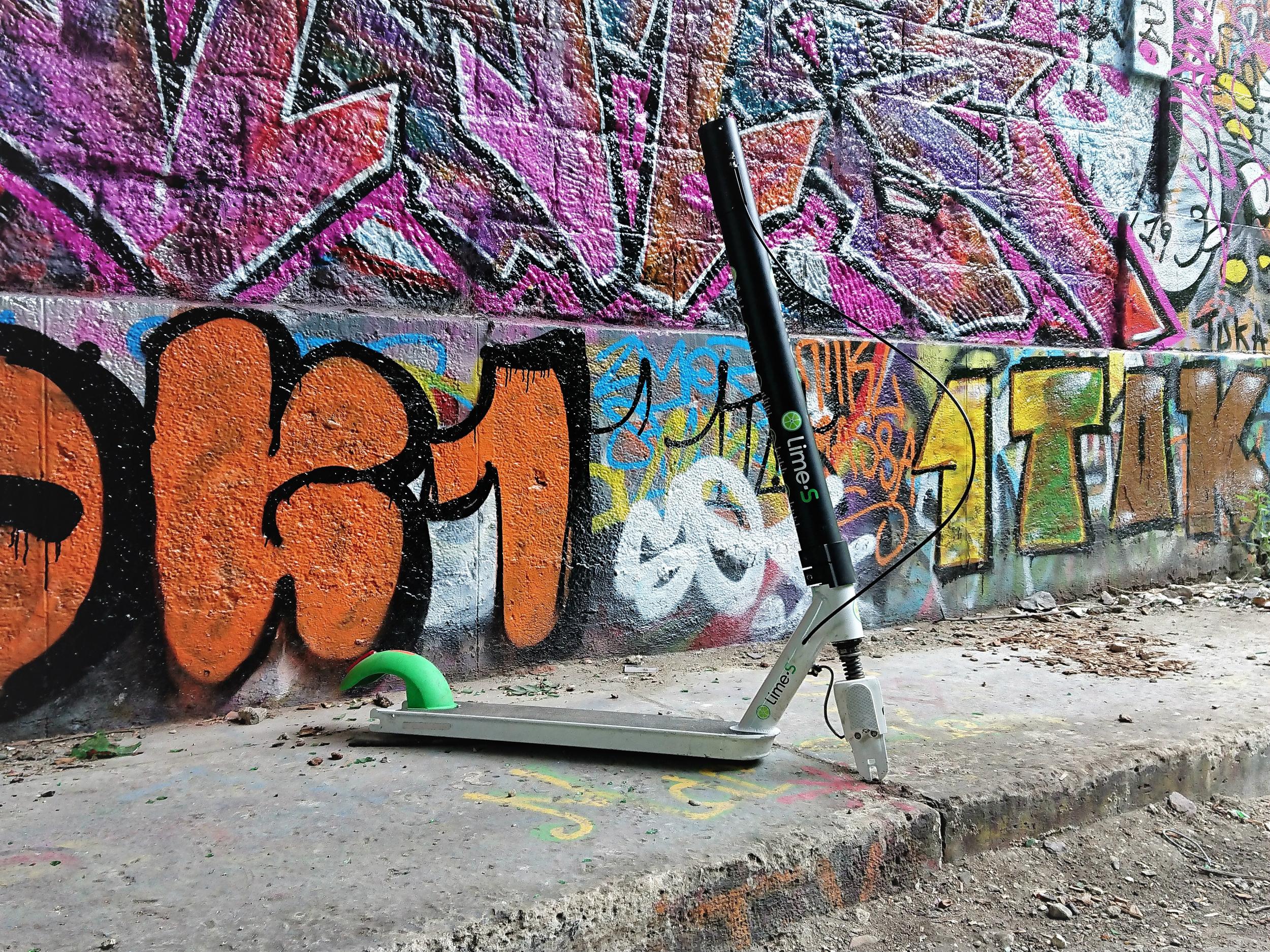 Isabelle Vanbrabant was walking home through a park one spring evening in Paris when an electric scooter crashed into her, breaking the pianist's wrist in two places. Beronique Kilebasa was crossing a street with her seven-week-old baby strapped to her chest when a man riding a similar scooter collided into her, knocking them both to the ground. In another incident, a scooter sped through a red light and straight into an 81-year-old man, killing him. All three accidents happened within weeks of each other, resulting from the thousands of electric scooters – or "trottinettes" as they are known locally – that have filled the streets of the French capital over the last year. For Vanbrabant, the accident has come at the cost of her career as a pianist at the famed Paris Opera. "The pavement is no longer a safe place for pedestrians," she says. "The evening I went to hospital for my injury, there were 10 other accidents in the emergency room caused by these scooters – five injured riders and five injured pedestrians." San Francisco-based startup Lime was the first to begin rolling out electric scooters in Paris in June 2018. Being cheap, relatively green, and needing only a smartphone and a credit card to use, Parisians and tourists were quick to adopt them. But since they were first introduced, more than 20,000 of the two-wheeled machines have now taken up residence on the city's pavements, streets and boulevards. While Lime is still the largest operator, it now shares the market with 11 separate competitors – more than any other city around the world – and the huge influx has riled some residents. Jérôme Courmet , the mayor of Paris's 13th arrondissement, called for "enough of this bullshit" in a sternly worded video recently posted to Twitter. 1/50 21 June 2019The silhouette of a girl performing yoga on the rocky crest of the Ancient Observatory Kokino on the occasion of fifth International Yoga Day, which is also the day of the summer solstice. The ancient astronomic observatory, located about 100 km northeast of Skopje, dates more than 4.000 years back in time. It is ranked by Nasa as the fourth ancient observatory in the world AFP/Getty 2/50 20 June 2019Indian residents get water from a community well in Chennai after reservoirs for the city ran dry. The drought is the worst in living memory for the bustling capital of Tamil Nadu state, India's sixth largest city, that is getting less than two thirds of the 830 million litres of water it normally uses each day AFP/Getty 3/50 19 June 2019Several new policemen, of Catalan regional Mossos d'Esquadra Police, throw their caps after their graduation ceremony in Mollet del Valles, Barcelona. A total of 804 new officers attended the ceremony EPA 4/50 18 June 2019Rescuers carry out an injured man from an earthquake-damaged building in Yibin, in China's southwest Sichuan province. The toll from the strong 6.0-magnitude earthquake rose to 12 dead and 134 injured as rescuers pulled bodies and survivors from wrecked buildings AFP/Getty 5/50 17 June 2019A protester wears a yellow raincoat to pay tribute to a man who died after falling from a scaffolding at the Pacific Place complex while protesting against the extradition bill. People have been demanding Hong Kong's leaders to step down and withdraw the bill Reuters 6/50 16 June 2019A fan watches on at the ICC Cricket World Cup match between India and Pakistan at Emirates Old Trafford in Manchester Action/Reuters 7/50 15 June 2019Nearly 15,000 Dutch people gather in Valenciennes to support their women's football team playing against Cameroon at the city's Hainaut stadium AFP/Getty 8/50 14 June 2019A worker attaches a US flag to a mast before fixing it along the side of a road with other Israeli flags in the settlement of Qela Bruchim in the Israeli-annexed Golan Heights. Israel's cabinet will meet in the Golan Heights to honour US President Donald Trump and vote on naming a settlement there after him, the prime minister's office announced AFP/Getty 9/50 13 June 2019French President Emmanuel Macron walks past the coffins of the three National Society of Sea Rescue (SNSM) ocean rescue volunteers, who died in a storm last week after their boat capsized, during a ceremony in their tribute at Fort-Saint Nicolas in Les Sables d'Olonne, France AFP/Getty 10/50 12 June 2019Police clash with protesters during a rally against a controversial extradition law proposal outside the government headquarters in Hong Kong. Violent clashes broke out as police tried to stop protesters storming the city's parliament, while tens of thousands of people blocked key arteries in a show of strength against government plans to allow extraditions to China AFP/Getty 11/50 11 June 2019Botswana became the latest country to decriminalise homosexuality, celebrated by activists as a day of "pride, compassion and love." In the landmark ruling, the southern African nation's High Court rejected sections of the penal code that criminalise same-sex relations and impose up to seven years in prison AP 12/50 10 June 2019A participant of the Koetztinger Whitsun Ride stands with his horse on a street near Bad Koetzingen, Germany. The procession of around 900 riders is one of the oldest Bavarian events AP 13/50 9 June 2019Police officers use pepper spray against protesters in Hong Kong. People took to the streets on Sunday to protest a proposed amendment to the extradition law that protesters fear would allow Hong Kong citizens to be unfairly extradited to China AP 14/50 8 June 2019A participant dances while holding a large rainbow flag during the Athens Gay Pride. Thousands marched in the 15th annual Athens Pride parade that was dedicated to the memory of a LGBTI activist who died earlier this year after a violent attack. Greek capital's Syntagma square, the venue of violent anti-austerity protests during the peak of the financial crisis, was full of rainbow flags as well as body painting kiosks for the more than 7,000 participants AFP/Getty 15/50 7 June 2019A man walks past a billboard showing members of the French women's World Cup football team on the side of a building on the Champs-Elysees avenue in Paris. The 2019 tournament starts this evening with the hosts playing South Korea Reuters 16/50 6 June 2019Canadian's Army officer stands during the international ceremony on Juno Beach in Courseulles-sur-Mer, Normandy, northwestern France, as part of D-Day commemorations marking the 75th anniversary of the World War II Allied landings in Normandy AFP/Getty 17/50 5 June 2019Queen Elizabeth II and US President Donald Trump at an event to commemorate the 75th anniversary of D-Day, in Portsmouth Reuters 18/50 4 June 2019Muslim worshippers gather to perform Eid al-Fitr prayers at the Martyrs Square of the capital Tripoli. Muslims worldwide celebrate Eid al-Fitr marking the end of the Muslim holy month of Ramadan AFP/Getty 19/50 3 June 2019President Donald Trump reviews an honor guard during a ceremonial welcome in the garden of Buckingham Palace in London AP 20/50 2 June 2019A cruise ship crashed into a dock and a tourist river boat on one of Venice's busiest canals. Four people were injured in the smash, Venice port authorities reported. It happened on the Giudecca Canal – a major thoroughfare that leads to Saint Mark's Square – on Sunday morning at 8.30am AFP/Getty 21/50 1 June 2019Supporters arrive at Wanda Metropolitano stadium for the Champions League final between Tottenham Hotspur and Liverpool in Madrid EPA 22/50 31 May 2019A Palestinian girl cool off by water to beat the scorching heat, as others pray outside the Dome of the Rock at the al-Aqsa Mosque in Jerusalem during the last Friday prayers of the Muslim holy month of Ramadan,31 May 2019. Israeli police Friday morning shot and killed a Palestinian young man following an alleged stabbing attack in Jerusalem’s Old City. Muslims around the world celebrate the holy month of Ramadan by praying during the night time and abstaining from eating, drinking, and sexual acts daily between sunrise and sunset. Ramadan is the ninth month in the Islamic calendar and it is believed that the Koran's first verse was revealed during its last 10 nights. EPA 23/50 30 May 2019Serena Williams in action during her second round match against Japan's Kurumi Nara. The 23-time grand slam winner went through to the next round 6-3, 6-2 Reuters 24/50 29 May 2019Ken Wyatt is sworn in as Minister for Indigenous Australians by Australia's Governor-General Sir Peter Cosgrove in Canberra, Australia. Scott Morrison announced his new ministry on Sunday 26 May, following his victory in the May 18 Federal election. The new Cabinet features a record number of women with seven taking on senior roles, including Bridget McKenzie as the first female Agriculture Minister. Ken Wyatt is the first indigenous person to be appointed the Indigenous Affairs Minister Getty 25/50 28 May 2019People look on as they examine the damaged remains of school in Dayton, Ohio, after powerful tornadoes ripped through the US state overnight, causing at least one fatality and widespread damage and power outages AFP/Getty 26/50 27 May 2019President Donald Trump and first lady Melania Trump attend a State Banquet with Japanese Emperor Naruhito, second from right, and Empress Masako at the Imperial Palace in Tokyo AP 27/50 26 May 2019Former Italian PM and leader of the right-wing party Forza Italia Silvio Berlusconi looks at photographers as he casts his vote at a polling station in Milan AFP/Getty 28/50 25 May 2019A paramilitary soldier stands guard in front of closed shops during restrictions in downtown area of Srinagar EPA 29/50 24 May 2019Pope Francis gestures as he participates alongside thousands of soccer-mad children in a project to promote the values of sport and soccer, at the Vatican Reuters 30/50 23 May 2019Bharatiya Janata Party (BJP) supporters celebrate their party's potential win as votes are counted for the Lok Sabha election in Bangalore, India. The Lok Sabha, the lower house of Parliament, elections, began on 11 April and held for 542 of the 543 lower house seats. A party or alliance needs 272 seats to form a government. It was announced that Narendra Modi was to retain the position of Prime Minister along with the BJP EPA 31/50 22 May 2019Palestinian children help their father sort through arugula produce before he heads to sell it at a market, in an impoverished area in Beit Lahia in the northern Gaza Strip AFP/Getty 32/50 21 May 2019Indonesia's Incumbent President from the Indonesian Democratic Party of Struggle (PDIP) Joko Widodo takes a selfie with local residents after his victory speech following the announcement of the election results at a slum area in Jakarta. Joko Widodo was re-elected after beating his rival, retired General Prabowo Subianto EPA 33/50 20 May 2019President-elect Volodymyr Zelensky holding an ancient Bulava (historical symbol of the state power) during his inauguration in the Ukrainian parliament in Kiev. Mr Zelensky with 73,22 percent of the votes beat out the current president Petro Poroshenko, who received 24,45 percent of the votes during the second tour of presidential elections in Ukraine which was held on 21 April Presidential Press Service/EPA 34/50 19 May 2019Sudanese protesters gather for a sit-in outside the military headquarters in Khartoum. Talks between Sudan's ruling military council and protesters are set to resume, army rulers announced, as Islamic movements rallied for the inclusion of sharia in the country's roadmap AFP/Getty 35/50 18 May 2019James Hinchcliffe of Canada rolls his car after hitting the wall during qualifications for the Indianapolis 500 IndyCar auto race in Indiana, US AP 36/50 17 May 2019Taiwan became first state in Asia to legalise same-sex marriage. Thousands of gay rights supporters gathered outside parliament in Taipei during the debate EPA 37/50 16 May 2019Spectators watch as riders take the start of stage six of the 102nd Giro d'Italia, Tour of Italy, race, 238kms from Cassino to San Giovanni Rotondo AFP/Getty 38/50 15 May 2019Buildings in Hung Hom district are shrouded in coastal fog in Hong Kong, China. In springtime, Hong Kong is affected by alternate cold and warm air. As cold air from the north recedes, warm and humid air comes in from the sea and as the water near the coast is still rather cold, the warm and humid air may be cooled sufficiently by the underlying cold water EPA 39/50 14 May 2019An Indian worker packs mangos for sale at a wholesale fruit market in Jammu, the winter capital of Kashmir. Mango is regarded as the national fruit of India, Pakistan, Bangladesh and the Philippines. India is one of the leading producers of tropical and subtropical fruits in the world and is said to be the world's largest mango producer EPA 40/50 13 May 2019A nurse carries a newborn baby after a fire broke out on the terrace of a children's hospital building in Ahmedabad, India Reuters 41/50 12 May 2019Members of the action group Extinction Rebellion hold banners in front of the Eiffel Tower after spilling fake blood on the Trocadero esplanade during a demonstration to alert on the state of decline of biodiversity, in Paris. Extinction Rebellion is an international movement that uses non-violent civil disobedience to achieve radical change in order to minimise the risk of human extinction and ecological collapse AFP/Getty 42/50 11 May 2019An armed police officer greets members of the Muslim community in front of Al Noor mosque as they arrive for the iftar, the evening meal, in Christchurch, New Zealand. Muslims around the world are observing the holiest month of Ramadan, fasting from sunrise to sunset for a month. Ramadan this year will be slightly sombre for New Zealand Muslims - especially those in Christchurch - in the wake of the mosque terror attacks where 51 people died after a gunman opened fire during Friday prayers at Linwood and Al Noor Mosques on March 15 Getty 43/50 10 May 2019Muslims perform prayers on a road outside a mosque on the first Friday of the holy fasting month of Ramadan in Srinagar Reuters 44/50 9 May 2019German Chancellor Angela Merkel greets people after posing for a family photo during the informal meeting of European Union leaders in Sibiu, Romania Reuters 45/50 8 May 2019Smokes rises after a huge explosion near the offices of the attorney general in Kabul, Afghanistan. Two police officials say Wednesday's explosion was followed by a gunbattle between militants and security forces AP 46/50 7 May 2019Reuters reporters Wa Lone and Kyaw Soe Oo wave as they walk to Insein prison gate as they were freed, after receiving a presidential pardon in Yangon, Myanmar Reuters 47/50 6 May 2019Students sit in circles as they read the Koran on the first day of Ramadan at Ar-Raudhatul Hasanah Islamic boarding school in Medan, North Sumatra, Indonesia. Muslims around the world celebrate the holy month of Ramadan by praying during the night time and abstaining from eating, drinking, and sexual acts during the period between sunrise and sunset. Ramadan is the ninth month in the Islamic calendar and it is believed that the revelation of the first verse in Koran was during its last 10 nights EPA 48/50 5 May 2019Dutch Prime Minister Mark Rutte ignites the liberation fire during the Liberation festival in Almere, The Netherlands. EPA 49/50 4 May 2019Demonstrators wearing bees masks and costumes lie on the ground during a demonstration for biodiversity called by the World Wide Fund for Nature (WWF) in Paris. AFP/Getty Images 50/50 3 May 2019Caster Semenya celebrates after winning the women's 800m at the IAAF Diamond League competition in Doha AFP/Getty 1/50 21 June 2019The silhouette of a girl performing yoga on the rocky crest of the Ancient Observatory Kokino on the occasion of fifth International Yoga Day, which is also the day of the summer solstice. The ancient astronomic observatory, located about 100 km northeast of Skopje, dates more than 4.000 years back in time. It is ranked by Nasa as the fourth ancient observatory in the world AFP/Getty 2/50 20 June 2019Indian residents get water from a community well in Chennai after reservoirs for the city ran dry. The drought is the worst in living memory for the bustling capital of Tamil Nadu state, India's sixth largest city, that is getting less than two thirds of the 830 million litres of water it normally uses each day AFP/Getty 3/50 19 June 2019Several new policemen, of Catalan regional Mossos d'Esquadra Police, throw their caps after their graduation ceremony in Mollet del Valles, Barcelona. A total of 804 new officers attended the ceremony EPA 4/50 18 June 2019Rescuers carry out an injured man from an earthquake-damaged building in Yibin, in China's southwest Sichuan province. The toll from the strong 6.0-magnitude earthquake rose to 12 dead and 134 injured as rescuers pulled bodies and survivors from wrecked buildings AFP/Getty 5/50 17 June 2019A protester wears a yellow raincoat to pay tribute to a man who died after falling from a scaffolding at the Pacific Place complex while protesting against the extradition bill. People have been demanding Hong Kong's leaders to step down and withdraw the bill Reuters 6/50 16 June 2019A fan watches on at the ICC Cricket World Cup match between India and Pakistan at Emirates Old Trafford in Manchester Action/Reuters 7/50 15 June 2019Nearly 15,000 Dutch people gather in Valenciennes to support their women's football team playing against Cameroon at the city's Hainaut stadium AFP/Getty 8/50 14 June 2019A worker attaches a US flag to a mast before fixing it along the side of a road with other Israeli flags in the settlement of Qela Bruchim in the Israeli-annexed Golan Heights. Israel's cabinet will meet in the Golan Heights to honour US President Donald Trump and vote on naming a settlement there after him, the prime minister's office announced AFP/Getty 9/50 13 June 2019French President Emmanuel Macron walks past the coffins of the three National Society of Sea Rescue (SNSM) ocean rescue volunteers, who died in a storm last week after their boat capsized, during a ceremony in their tribute at Fort-Saint Nicolas in Les Sables d'Olonne, France AFP/Getty 10/50 12 June 2019Police clash with protesters during a rally against a controversial extradition law proposal outside the government headquarters in Hong Kong. Violent clashes broke out as police tried to stop protesters storming the city's parliament, while tens of thousands of people blocked key arteries in a show of strength against government plans to allow extraditions to China AFP/Getty 11/50 11 June 2019Botswana became the latest country to decriminalise homosexuality, celebrated by activists as a day of "pride, compassion and love." In the landmark ruling, the southern African nation's High Court rejected sections of the penal code that criminalise same-sex relations and impose up to seven years in prison AP 12/50 10 June 2019A participant of the Koetztinger Whitsun Ride stands with his horse on a street near Bad Koetzingen, Germany. The procession of around 900 riders is one of the oldest Bavarian events AP 13/50 9 June 2019Police officers use pepper spray against protesters in Hong Kong. People took to the streets on Sunday to protest a proposed amendment to the extradition law that protesters fear would allow Hong Kong citizens to be unfairly extradited to China AP 14/50 8 June 2019A participant dances while holding a large rainbow flag during the Athens Gay Pride. Thousands marched in the 15th annual Athens Pride parade that was dedicated to the memory of a LGBTI activist who died earlier this year after a violent attack. Greek capital's Syntagma square, the venue of violent anti-austerity protests during the peak of the financial crisis, was full of rainbow flags as well as body painting kiosks for the more than 7,000 participants AFP/Getty 15/50 7 June 2019A man walks past a billboard showing members of the French women's World Cup football team on the side of a building on the Champs-Elysees avenue in Paris. The 2019 tournament starts this evening with the hosts playing South Korea Reuters 16/50 6 June 2019Canadian's Army officer stands during the international ceremony on Juno Beach in Courseulles-sur-Mer, Normandy, northwestern France, as part of D-Day commemorations marking the 75th anniversary of the World War II Allied landings in Normandy AFP/Getty 17/50 5 June 2019Queen Elizabeth II and US President Donald Trump at an event to commemorate the 75th anniversary of D-Day, in Portsmouth Reuters 18/50 4 June 2019Muslim worshippers gather to perform Eid al-Fitr prayers at the Martyrs Square of the capital Tripoli. Muslims worldwide celebrate Eid al-Fitr marking the end of the Muslim holy month of Ramadan AFP/Getty 19/50 3 June 2019President Donald Trump reviews an honor guard during a ceremonial welcome in the garden of Buckingham Palace in London AP 20/50 2 June 2019A cruise ship crashed into a dock and a tourist river boat on one of Venice's busiest canals. Four people were injured in the smash, Venice port authorities reported. It happened on the Giudecca Canal – a major thoroughfare that leads to Saint Mark's Square – on Sunday morning at 8.30am AFP/Getty 21/50 1 June 2019Supporters arrive at Wanda Metropolitano stadium for the Champions League final between Tottenham Hotspur and Liverpool in Madrid EPA 22/50 31 May 2019A Palestinian girl cool off by water to beat the scorching heat, as others pray outside the Dome of the Rock at the al-Aqsa Mosque in Jerusalem during the last Friday prayers of the Muslim holy month of Ramadan,31 May 2019. Israeli police Friday morning shot and killed a Palestinian young man following an alleged stabbing attack in Jerusalem’s Old City. Muslims around the world celebrate the holy month of Ramadan by praying during the night time and abstaining from eating, drinking, and sexual acts daily between sunrise and sunset. Ramadan is the ninth month in the Islamic calendar and it is believed that the Koran's first verse was revealed during its last 10 nights. EPA 23/50 30 May 2019Serena Williams in action during her second round match against Japan's Kurumi Nara. The 23-time grand slam winner went through to the next round 6-3, 6-2 Reuters 24/50 29 May 2019Ken Wyatt is sworn in as Minister for Indigenous Australians by Australia's Governor-General Sir Peter Cosgrove in Canberra, Australia. Scott Morrison announced his new ministry on Sunday 26 May, following his victory in the May 18 Federal election. The new Cabinet features a record number of women with seven taking on senior roles, including Bridget McKenzie as the first female Agriculture Minister. Ken Wyatt is the first indigenous person to be appointed the Indigenous Affairs Minister Getty 25/50 28 May 2019People look on as they examine the damaged remains of school in Dayton, Ohio, after powerful tornadoes ripped through the US state overnight, causing at least one fatality and widespread damage and power outages AFP/Getty 26/50 27 May 2019President Donald Trump and first lady Melania Trump attend a State Banquet with Japanese Emperor Naruhito, second from right, and Empress Masako at the Imperial Palace in Tokyo AP 27/50 26 May 2019Former Italian PM and leader of the right-wing party Forza Italia Silvio Berlusconi looks at photographers as he casts his vote at a polling station in Milan AFP/Getty 28/50 25 May 2019A paramilitary soldier stands guard in front of closed shops during restrictions in downtown area of Srinagar EPA 29/50 24 May 2019Pope Francis gestures as he participates alongside thousands of soccer-mad children in a project to promote the values of sport and soccer, at the Vatican Reuters 30/50 23 May 2019Bharatiya Janata Party (BJP) supporters celebrate their party's potential win as votes are counted for the Lok Sabha election in Bangalore, India. The Lok Sabha, the lower house of Parliament, elections, began on 11 April and held for 542 of the 543 lower house seats. A party or alliance needs 272 seats to form a government. It was announced that Narendra Modi was to retain the position of Prime Minister along with the BJP EPA 31/50 22 May 2019Palestinian children help their father sort through arugula produce before he heads to sell it at a market, in an impoverished area in Beit Lahia in the northern Gaza Strip AFP/Getty 32/50 21 May 2019Indonesia's Incumbent President from the Indonesian Democratic Party of Struggle (PDIP) Joko Widodo takes a selfie with local residents after his victory speech following the announcement of the election results at a slum area in Jakarta. Joko Widodo was re-elected after beating his rival, retired General Prabowo Subianto EPA 33/50 20 May 2019President-elect Volodymyr Zelensky holding an ancient Bulava (historical symbol of the state power) during his inauguration in the Ukrainian parliament in Kiev. Mr Zelensky with 73,22 percent of the votes beat out the current president Petro Poroshenko, who received 24,45 percent of the votes during the second tour of presidential elections in Ukraine which was held on 21 April Presidential Press Service/EPA 34/50 19 May 2019Sudanese protesters gather for a sit-in outside the military headquarters in Khartoum. Talks between Sudan's ruling military council and protesters are set to resume, army rulers announced, as Islamic movements rallied for the inclusion of sharia in the country's roadmap AFP/Getty 35/50 18 May 2019James Hinchcliffe of Canada rolls his car after hitting the wall during qualifications for the Indianapolis 500 IndyCar auto race in Indiana, US AP 36/50 17 May 2019Taiwan became first state in Asia to legalise same-sex marriage. Thousands of gay rights supporters gathered outside parliament in Taipei during the debate EPA 37/50 16 May 2019Spectators watch as riders take the start of stage six of the 102nd Giro d'Italia, Tour of Italy, race, 238kms from Cassino to San Giovanni Rotondo AFP/Getty 38/50 15 May 2019Buildings in Hung Hom district are shrouded in coastal fog in Hong Kong, China. In springtime, Hong Kong is affected by alternate cold and warm air. As cold air from the north recedes, warm and humid air comes in from the sea and as the water near the coast is still rather cold, the warm and humid air may be cooled sufficiently by the underlying cold water EPA 39/50 14 May 2019An Indian worker packs mangos for sale at a wholesale fruit market in Jammu, the winter capital of Kashmir. Mango is regarded as the national fruit of India, Pakistan, Bangladesh and the Philippines. India is one of the leading producers of tropical and subtropical fruits in the world and is said to be the world's largest mango producer EPA 40/50 13 May 2019A nurse carries a newborn baby after a fire broke out on the terrace of a children's hospital building in Ahmedabad, India Reuters 41/50 12 May 2019Members of the action group Extinction Rebellion hold banners in front of the Eiffel Tower after spilling fake blood on the Trocadero esplanade during a demonstration to alert on the state of decline of biodiversity, in Paris. Extinction Rebellion is an international movement that uses non-violent civil disobedience to achieve radical change in order to minimise the risk of human extinction and ecological collapse AFP/Getty 42/50 11 May 2019An armed police officer greets members of the Muslim community in front of Al Noor mosque as they arrive for the iftar, the evening meal, in Christchurch, New Zealand. Muslims around the world are observing the holiest month of Ramadan, fasting from sunrise to sunset for a month. Ramadan this year will be slightly sombre for New Zealand Muslims - especially those in Christchurch - in the wake of the mosque terror attacks where 51 people died after a gunman opened fire during Friday prayers at Linwood and Al Noor Mosques on March 15 Getty 43/50 10 May 2019Muslims perform prayers on a road outside a mosque on the first Friday of the holy fasting month of Ramadan in Srinagar Reuters 44/50 9 May 2019German Chancellor Angela Merkel greets people after posing for a family photo during the informal meeting of European Union leaders in Sibiu, Romania Reuters 45/50 8 May 2019Smokes rises after a huge explosion near the offices of the attorney general in Kabul, Afghanistan. Two police officials say Wednesday's explosion was followed by a gunbattle between militants and security forces AP 46/50 7 May 2019Reuters reporters Wa Lone and Kyaw Soe Oo wave as they walk to Insein prison gate as they were freed, after receiving a presidential pardon in Yangon, Myanmar Reuters 47/50 6 May 2019Students sit in circles as they read the Koran on the first day of Ramadan at Ar-Raudhatul Hasanah Islamic boarding school in Medan, North Sumatra, Indonesia. Muslims around the world celebrate the holy month of Ramadan by praying during the night time and abstaining from eating, drinking, and sexual acts during the period between sunrise and sunset. Ramadan is the ninth month in the Islamic calendar and it is believed that the revelation of the first verse in Koran was during its last 10 nights EPA 48/50 5 May 2019Dutch Prime Minister Mark Rutte ignites the liberation fire during the Liberation festival in Almere, The Netherlands. EPA 49/50 4 May 2019Demonstrators wearing bees masks and costumes lie on the ground during a demonstration for biodiversity called by the World Wide Fund for Nature (WWF) in Paris. AFP/Getty Images 50/50 3 May 2019Caster Semenya celebrates after winning the women's 800m at the IAAF Diamond League competition in Doha AFP/Getty "Scooter operators, look at me in the eye," the video begins. "Electric scooters being poorly parked on the pavement is over." In the background, a task force set up by Courmet is seen loading the scooters onto the back of a truck to be taken away. At the Lime offices in Paris, they are well aware of the carnage their two-wheeled machines are causing on the streets outside. When asked about Parisians being fed up with the way people are using their scooters, Lime's head of international communications Paloma Castro throws up her hands and says "so are we". By way of expressing this, the startup launched an unconventional ad campaign across the city in June. Slogans currently adorning bus stops and metro billboards include "Crap scooters", "I'm sick of these scooters", and "These scooters are a real pain in the arse". (Each slogan comes with an asterisk and accompanying small print: "Not applicable to scooters respecting pedestrians/not riding on pavements/parked correctly.") "This poster campaign is an opportunity for us to show that we understand and share Parisian's concerns," says Arthur-Louis Jacquier, Lime's general manager in France. "We want to change the behaviour by challenging both the users and detractors of our service." Ms Castro describes big cities like Paris as an intimidating "jungle" for their inhabitants. "People become hostile towards cities and don't respect them," she says. "This is a question of civility and how we behave. It's not just about the scooters, it's a conversation we need to have as a society." Lime is already in talks with city authorities about the issues but now hopes to open up the conversation to include the citizens of Paris. To begin this, the company has announced 12 measures for "sustainable and responsible riding", which include lessons on how to ride an e-scooter and distributing free helmets to its users. The way electric scooters and their operators have been able to overwhelm Paris is in part due to relaxed French laws that allow this new form of transport to thrive. In London, for example, electric scooters are illegal on the roads unless they are registered and taxed, while also forbidden on the pavement due to the 1835 Highway Act, which prohibits anyone from riding a "carriage of any description" on a footpath. No such quirky laws exist in France, and less than a year after launching in Paris, more than one in 10 Parisians are already using the dockless scooters. A further one in three say they would consider using them, according to a recent survey by Odoxa. Using one, it is easy to see why they have become so popular. Cheap, ubiquitous, and easier to ride than a bicycle, electric scooters manage to be both fun, while also fulfilling the final hurdle of urban transportation, known as the "last mile". Paris already pioneered ways to bridge this distance between a person's home or place of work and transport hubs like bus stops and metro stations. In 2007 the city launched the Velib' bikeshare scheme – the first capital city in the world to introduce this type of infrastructure. Despite the success of Velib', electric scooters manage to meet a need that the fixed docking stations of the bicycles prevent. The dockless nature of scooters like Lime's mean people can ride them right to their front door, should they wish. And this presents another problem. Clutter Less moving parts mean they are also easier to maintain and repair than bikes, while also being as environmentally friendly. In the home of the Paris Agreement, it seems the gas-guzzling, carbon-coughing cars face more of an existential threat on the streets of Paris. "They are a revolution of urban mobility," Castro says. "It's pretty obvious they're here to stay." Research published in May by Boston Consulting Group suggests Castro might be right. The research group estimates that the global market for shared e-scooter rides will be between $40bn and $50bn by 2025. "Despite their drawbacks, they have the potential to fill an important role in urban mobility at a time when solutions to congestion and pollution are urgently needed," BCG's report stated, adding that cities that embrace them have a lot to gain, "not least by making city centres more fun". The uncontrollable success of the scooters in Paris may be good business for the startups taking advantage of this opportunity, but in a city that has voted for a socialist mayor since 2001, the scooter scourge is seen by some as a symbol of unbridled capitalism. People have gone as far as to take their frustrations out on the machines themselves. Walking around the streets of the city, it doesn't take long to spot one that's been vandalised. Countless others have been been thrown into rivers and canals. Pacifying the streets is proving a key political challenge for TK Hidalgo, the mayor of Paris, who will need to find a way to integrate the scooters into the city's existing infrastructure if she is to stand any chance of re-election. "We need order and rules to assure road safety and to calm the streets, sidewalks and neighbourhoods of our city," Hidalgo said last week. "It's not far from anarchy and it's extremely difficult for a city like ours to manage this kind of service." Hidalgo plans to introduce designated parking spaces for the scooters, while also limiting the speed to just 20kmh on most roads and 8kmh in busy areas. There could also soon be a cap on the number of operators and scooters allowed in the city, with a maximum of three operators seen as a more manageable number. Until then, there appears to be no end to the number of accidents reported each day. Jean-Rene Albertin, the partner of Van Brabant, has set up an association alongside Arnaud Kielbasa, whose wife Beronique and baby were hit by a rogue scooter. Together they are hoping to bring to an end what they describe as "anarchy in the streets" through their association APACAUVI (Philanthropic association against urban anarchy). "It is out of control, and the police seem to be doing nothing to stop people from riding these scooters wherever and however they want," Albertin says. "We need to take action if we are to prevent more terrible accidents like this taking place. "It is a difficult fight because ultimately it is a fight against stupidity. I'm not sure you can even win a fight against stupidity but at least we can help the victims." As for Vanbrabant, doctors say it may take up to a year before her wrist is healed, though it is not certain if she will ever enjoy the same movement she did before. But it's the people riding them irresponsibly rather than the scooters themselves that she's against. "They look fun, they seem easy to ride but they're deceptively dangerous," she says. When asked if she would ever ride one herself, she gestures to her wrist. "Even if I wanted to now, I couldn't."  |
| Review: ‘Curfew,’ the Zombie Plague-Death Race Mash-Up You’ve Been Waiting For - The New York Times Posted: 21 Jun 2019 12:01 PM PDT  The new British series "Curfew" sounds as if it were created in an infernal lab where horror fans are strapped to gurneys and hooked up to pleasure receptors. It imagines a plague of fast zombies running around at night, forcing the government to institute a permanent 7 p.m. to 7 a.m. curfew. (Even worse things have happened to Scotland.) Then it adds what you never realized a zombie story needed until now: an ultraviolent cross-country road race whose winner is to be whisked away to a peaceful island where scientists are working on a cure for the undead. So: "28 Days Later" and "The Walking Dead" meet "Death Race" and "Mad Max," with bits of "The Purge," "The Terminator," "Escape From New York" and "Children of Men" thrown in. With an evil pharmaceutical corporation lurking in the background. And we haven't even gotten to the cast. Sean Bean is the angry guy in the muscle car with the much younger and pregnant girlfriend played by Rose Williams. Miranda Richardson is the stressed-out mom in the big truck. Billy Zane, with a cowboy hat and a bottomless martini shaker, leads the crew of wannabe Merry Pranksters in the beat-up Volkswagen van. Waiting for them on the island is the mandatory sinister American corporate type, played by Adam Brody of "The O.C.," or perhaps just a hologram. It's a genre sundae with several extra helpings of cherries, and while it's not as wildly delightful as it sounds in outline — what could be? — it's not a bad binge for viewers who don't mind B-movie production values and dialogue, and who like their zombie heavy-metal shoot-em-ups grounded more in sentimental family drama than blood-spattered excess. If they can find the show, that is. "Curfew," whose eight episodes premiere Monday, is the second series under the banner of Spectrum Originals (the first was the cop show "L.A.'s Finest"). That means it can be seen only on the on-demand channels of Spectrum cable systems. The company is pointing out that the shows are "free on-demand" — no Netflix or Hulu subscription needed — but that's true only after you've paid for Spectrum cable service, which is what this whole cord-cutting thing was about in the first place. The idea is to reclaim video-on-demand from the streaming companies, turning their own original-content strategy against them as a way to persuade people to keep paying for cable. Best of luck. Image "Curfew" isn't a reason to keep the cord intact — maybe that will be Spectrum Originals' "Mad About You" reboot with Helen Hunt and Paul Reiser, promised for later this year. But it has some appealing characters and it's sufficiently tongue-in-cheek to keep you engaged. It was created for Sky in Britain by Matthew Read, who as a former commissioning editor for the BBC has an impressive list of producing credits on other people's distinctive TV series: "Happy Valley," "Peaky Blinders," "Taboo," "Doctor Foster," "McMafia." He's clearly learned things along the way about pace and plotting — "Curfew" has its mysteries, which are gradually revealed through flashbacks, but it's always clear who's who and what's happening. Read has also developed a thick skin when it comes to killing off characters, or perhaps it's just a producer's trick: Save money by putting your most expensive actors on short contracts. The major characters — preponderantly heroines, rather than heroes — are played by less well known performers like Phoebe Fox, as a level-headed paramedic who enters her ambulance in the race at the last minute, and Ike Bennett as a digital-native teenager trying to navigate the course using handwritten notebooks compiled by his father. The various crews rumble through the night, alternately hindering and helping one another and being picked off by the extremely mobile undead. There's a lot of collateral damage, but there are frequent respites, during which someone's concerned mother is liable to announce, "I've got egg mayonnaise, or cheese and pickle." There'll always be an England. Well, probably. Curfew  |
| Maintenance woes plague Duval schools - The Florida Times-Union Posted: 14 Jun 2019 12:00 AM PDT Stacy McDonald Taylor, a mother of two, has a Chick-fil-A routine. When the air conditioning goes out at her son's school — something she says is a regular occurrence — she logs in to the fast-food center's app on her phone and places her standard "A/C outage order": gallons of sweet tea, lemonade and ice for Mayport Elementary School's exceptional education unit. Taylor said the experience is frustrating. She's not alone. Data provided by Duval County Public Schools revealed thousands of incidents between April 2018 and March 2019 where the air conditioning was out inside a classroom, main office, media center, a whole building or a block of rooms. In that 12-month period, Duval schools reportedly paid more than $9 million in air conditioning-related maintenance and repairs. Taylor's son, who is on the autism spectrum, along with his peers don't feel particularly motivated for school when the building gets hot. So the mom does her best to keep everyone cool. It's to the point that the fast-food employees know Taylor by name. "The Chick-fil-A on Hodges all know me and will ask, 'Oh my gosh, is the A/C out again?'" she said. "It happens so often that I have a standing order on my Chick-fil-A app." According to Taylor, this school year alone, her son's classroom was without air conditioning for two or more days, multiple times. Every school day between April 2018 and 2019, Duval schools issued internal work orders for air-conditioning related issues, district records showed. On 169 of the 180 school days reflected in district data, at least 20 schools had work orders. That includes outages during major testing days, as text messages from school facility personnel detailed. THOUSANDS OF BREAKDOWNS Thousands of internal air-conditioning work orders were placed on days that district and statewide exams — including Florida Standards Assessment exams, end-of-course assessments, readiness screeners and diagnostic exams — took place. Duval School Board Vice Chairman Warren Jones confirmed that, in the last week of classes, 17 Duval schools experienced A/C outages. Air conditioning and maintenance issues play a large role in School Superintendent Diana Greene's master facility plan recommendations, which have been in the works for six months. If the half-cent sales tax referendum is approved, the $1.9 billion plan would renovate and rebuild what are some of Florida's oldest schools. The proposed sales tax would last 15 years and raise Duval's sales tax from 7 to 7.5 cents. The question remains whether Jacksonville's City Council will give voters the chance to vote on the sales tax. That's because while other counties proposing a school sales tax interpreted that state laws required commissions to grant a school board's request to put a referendum on the ballot, city attorney Stephen Durden ruled otherwise. A recent University of North Florida Public Opinion Research Lab poll showed about 75 percent of registered voters in Duval County support a half-cent sales tax to upgrade or replace aging schools. In addition, about 34 percent supported a 2019 special election. Forty-nine percent favored a 2020 general election, and 17 percent didn't support a referendum at all. But the likelihood of a November 2019 special election for the sales tax is growing slimmer following a City Council committee meeting last week. At the meeting, the council's finance committee approved an amendment to put the referendum on the November 2020 ballot instead of its own special election a year earlier. But the council's Rules Committee deferred voting on the bill. Despite the City Council's next meeting being scheduled for Tuesday, no further action regarding the referendum is planned until July. That could change. Council member Garrett Dennis on Friday requested that a special meeting of the City Council be held on Monday at 3:30 p.m. to discuss the school issue. "I'm hopeful that the City Council will have a heart for our children and reconsider delaying this vote," Taylor said. "We are a school-choice family. I am a strong believer in providing sustainable, diverse educational options for all of our city's children in safe environments." Records provided to the Florida Times-Union revealed that from April 2018 to March 2019, Duval County Public Schools completed just under $2.5 million worth of internal work orders related to air conditioning systems. The internal work included over 9,000 orders ranging from chillers that were down, vents needing repairs, cooling tower inspections and leaks. That internal work is only a sampling of the school district's A/C expenses. Duval County Public Schools spokesman Tracy Pierce confirmed most of the county's air conditioning-related work is contracted out. In the same 12-month period, the school system outsourced about $6.7 million worth of A/C work for a total cost of about $9.19 million in one year. The Times-Union requested detailed information about the contracted work, but the district has not yet provided the records. Duval Teacher of the Year finalist Rachel Duff is an English for language learners teacher at DuPont Middle School. She said a student's learning environment makes all the difference — especially since all of her sixth-, seventh- and eighth-graders are new to the United States. "It is critical that the room in which we are learning evokes a feeling of warmth, security and welcomeness," Duff said. "The same principle applies to entire school buildings." Duff, a Jacksonville resident of 20 years, continued, "It is the public's right to make that choice of the half penny sales tax on the November 2019 ballot." LEARNING IMPACTED She said the state of a school building affects education, student learning, teacher morale and parent and community members' attitudes toward local education. "The improvement of our school buildings is an issue of access, equity and justice," she said. "It is ultimately a matter of all of those things because your ZIP code should never determine your quality of education." Latrice Carmichael has steadily advocated for better school facilities as a recent graduate from the Jacksonville Public Education Fund's Parents Who Lead initiative. At her son's school, Carmichael said she's attended multiple events — including school open houses and teacher appreciation luncheons — where the air conditioning wasn't working. She was serving food at a teachers' lunch earlier this year when the volunteers discovered the A/C was broken inside the teacher's lounge and roaches were in the area. The group ended up having to move to another room. "It killed the whole mood," she said. "We can't keep letting stuff like that happen." Carmichael said her son's school, the Young Men's and Women's Leadership Academy at Eugene Butler Middle School, also has roaches and rodents. According to district data, internal work orders at Butler Middle School cost the district $27,091 in 12 months. That's not including any contract work. Carmichael spoke at a recent City Council public hearing in support of the referendum to place the sales tax for public schools on the ballot. "We can't keep putting Band-Aids on the school system … allowing our kids to go to school and sending them to buildings that look like this," she said. "Put this on the ballot in November of 2019. We don't want to have to wait." Butler Middle School isn't even the costliest problem, records show. Three-quarters of the district's air-conditioning work is contracted out , nd certain schools only use contracted work. Frank H. Peterson Academies of Technology, a vocational school designed to help students enter the workforce, had an air-conditioning internal work order at least once a week every week of the school year. That doesn't count any additional work that was contracted out. "Frank H. Peterson was built in 1978 and is an enormous building with many A/C units," Principal Jessica Mastromatto said. "Naturally, as the units age, they stop working. We are fortunate that whenever one of the rooms loses A/C, we can relocate students to another room with A/C while district staff quickly make repairs." Still, Mastromatto said shuffling students around has an impact on them and staff. "We are a unique, career and technical education school where our students receive hands-on, project-based learning in labs," she said. "When the A/C units go out in these areas, our students lose some of that valuable time and instead must do more book work, research assignments or computer-based learning. So I'm absolutely in favor in the effort we're undertaking now to bring our buildings up to date." According to district data, 131 of the district's 163 public schools used internal work orders for air-conditioning related issues. On the average school day, 41 schools had an internal work ordered. That doesn't count the three-quarters of work that was outsourced. Based on internal work orders alone, Frank H. Peterson Academies of Technology repairs cost $77,430. Other schools that ran up high internal air conditioning repair costs include Paxon School for Advanced Studies ($77,635), Jean Ribault High School ($61,858), Lake Shore Middle School ($60,458) and Westside High School ($54,061). Again, that doesn't account for any air conditioning work that was outsourced. Darlene Miller, whose son graduated from Duval County Public Schools this month, criticized the air conditioning woes at a City Council meeting. "I encourage you if you do not pass this [referendum], the next time the A/C goes out at a school, turn off your A/C," she said. Miller is a staunch supporter of public schools. She pulled her son, who has special needs, out of private school to attend public school, saying it was the only place that gave him the accommodations and support he needed. "It's not about you," she told city council members. "It's about the children who are sitting in classrooms with broken A/C units." But air conditioning units aren't the only thing that runs up the tab to Duval schools' current $243 million in deferred maintenance costs. Currently, maintenance and repairs in district schools cost $500,000 a month. District schools — some of the oldest within the state — are faced with sinking foundations, falling ceilings, corroded stairwells, flooding and more. If funding is received, Pierce said it would be applied proportionally to projects in each of the seven school board districts. "The proportions will be based on the condition of the schools in those seven districts as measured by the facility condition index engineering study that began this process," he said. "The district will develop a methodology to determine the order of projects. By bonding against the half-penny proceeds, projects in each of the seven board member districts will begin very quickly." In December, Andrew Robinson Elementary School's library water pooled on carpets. A pinhole in the media center's fire sprinkler pipe caused a flood. As a result, the room had to be dried and the carpet replaced. Because of that, any schools that were slated to get new carpet this school year were forced further back in the line, according to Superintendent Greene. "That's where we are today," Greene said. "Today, we're reacting to maintenance issues. We're not able to plan ahead. We're not able to say, 'This is what we want to address next year.'" Across town in Fairfax, cracks started to form along the ceiling at Fishweir Elementary School. The wing of the school facing issues was built 95 years ago in 1924. The school itself was built in 1917. Today, walls flexing caused the building's roof and structure to need an additional wooden support system to hold it up. Classroom decorations dangle from the bare-wood support beams. "These represent things that happened this year," Greene said. "[Things] that were not in the budget and now we have to take our maintenance dollars and put them toward this." Throughout the state, 24 counties have a half-cent sales tax for schools. Most recently in Northeast Florida, St. Johns County voters approved a school-related tax by a margin of 60 percent in a November 2015 special election. Another district is looking at a sales tax increase. On Thursday, Clay County's school board will decide if it wants to place a similar half-cent sales tax increase on a special election ballot. The tax would go toward repairs and renovations the district estimates will cost about $618 million. LET THE VOTERS DECIDE The swiftness is a stark contrast from Duval's process, as noted by Duval School Board Chairwoman Lori Hershey. "As schools literally crumble, as safety and security needs continue to grow, as pipes burst and air conditioning fails, your City Council has responded by saying this: 'Let's wait,'" Hershey wrote in a guest column for the Times-Union. "The City Council didn't need to make this their issue, but now it is. And there is a simple remedy: Let the voters decide." Tyrona Clark-Murray is a 26-year teaching veteran and former school administrator in Duval. Her grandson, who attended kindergarten this school year, goes to Biscayne Elementary School. She wants to see the referendum pass so he can thrive. "We need the basics," she said. "The basics is a good building with all the right materials so him, his class and the classes ahead of him will be able to learn." Clark-Murray remembered when, while teaching, she was nearly nailed by a falling ceiling tile. "I passed a second before the tile fell on me because another teacher's A/C system was leaking," she said. "That's ridiculous. It's ridiculous that we're in this position." She hopes to see the referendum placed on the November 2019 ballot. "The majority of Jacksonville civilians will vote for it. We're not asking for the moon. We're asking for the very basics," Clark-Murray said. "Just put the referendum on the ballot." Moms like Stacy McDonald Taylor say they're growing frustrated by the back-and-forth for moving a sales tax farther down the road. "It is unfathomable to me that this is even something that is a debate," she said. "Preventing our schools from making the case for generating capital funds to support safe school buildings is the opposite of supporting school choice. It is the total abandonment of that idea." She continued, "It is abandoning the responsibility to maintain school buildings. It is abandoning the children and teachers within those structure, sometimes with no air conditioning and ceiling tiles falling around them." Times-Union staff writer Andrew Pantazi contributed to this report. Emily Bloch: (904) 359-4083  |
| You are subscribed to email updates from "what year was the plague" - Google News. To stop receiving these emails, you may unsubscribe now. | Email delivery powered by Google |
| Google, 1600 Amphitheatre Parkway, Mountain View, CA 94043, United States | |


Comments
Post a Comment