Childhood TB (part 2): presentation and diagnosis

Invalid Access Key! Invalid Access Key!
“In 2019, Taming Men From Toxic to Timid - GoDanRiver.com” plus 2 more |
| In 2019, Taming Men From Toxic to Timid - GoDanRiver.com Posted: 01 May 2019 01:00 AM PDT  Identity politics revives sexist stereotypes, and like most stereotypes, they diminish us all to a multitude of prejudices. Generalizations seek the simplest common denominator and usually sink to the lowest. In conversations about manhood, which, in certain circles, is regarded as something like the black plague of the 14th century, we're reduced to talking about the toxic male as the key to understanding the nature of men. We know that not all men suffer the curse of venomous aggressiveness, but the popular media version of the male animal makes the slightest aggression — hugs, flirtatious banter and harmless hand and neck touches, once regarded as gentle gestures of affection — the weapons of masculine armament. They must be eradicated to save the male-female relationship. The race, after all, must stumble on. You could ask an old codger like former Vice President Joe Biden. He's having to learn that what once worked as an affectionate gesture doesn't work in the time warp where old codgers live. Thus the overdone toxic male — crusty on the outside, tough on the inside — is evolving into the timid guy, afraid of his shadow, something like the groundhog. But unlike the groundhog, he must test things every day. Life is a fearsome thing for Generation Z. Boston College now offers course lessons in "social courage" to help the frightened male find romance. In one assignment, a professor challenged her students to ask someone of "legitimate romantic interest" out on a date. The prospect so terrified the class that one young man threw up. Finally, the day came when he figured he had enough "social courage" to make a stab at it. "I can do this," he told himself. "Just ask her. The worst thing she can do is say no." He walked up to her, as he recounted to Elizabeth Bernstein in The Wall Street Journal, and blurted out, "Hey, do you want to go out on a date?" They both survived. Flirting and courting are not easy in Generation Z, where the lives of the young have been so micromanaged by parents, teachers and peers that when the inevitable urges of youth arrive, the youths often don't have a clue about what to do. They're afraid of the pains and pangs that have always punctuated this most difficult transition from childhood to adulthood, the passage that typically makes high school such a minefield of emotions, feelings and passions. But for the beautiful cheerleader or the swaggering quarterback, few of us recall those days with unalloyed pleasure. I still wince at recalling my first crush on a suave senior. I was only an overly serious sophomore. The senior was the after-school clerk at the corner drugstore, and I used the excuse of buying a tube of toothpaste just for the sight of him. I was trying to get the social courage to ask him to take me to the Sadie Hawkins Day dance, named for the day in the Lil Abner comic strip where the girls ask the boys out. After several toothpaste-buying trips, I finally asked him and he replied, with the gravity of the secretary of state answering a diplomatic invitation, "I'll have to check my calendar and get back to you." He finally answered with a long shaggy-dog story about having to take an uncle to a family dinner, rambling on with the explanation, the facts of which I've long forgotten — if I even heard them. So great was my mortification. But I did collect a lifetime supply of Pepsodent toothpaste. Asking and being told no is never easy, as we all remember. We just had to put it down to the agony of growing up. Being philosophical about disappointments of the heart is not so easy among les miserables of Generation Z. These are the "snowflakes" who imagine they're unique in fleeing a meltdown and think they're entitled to a safe place to retreat to when someone or something unpleasant flits across the radar screen. The timid man may be overreacting to a subconscious understanding that being the man isn't what he used to be, with women comprising the majority of scholars in most of the professional schools, such as medicine and law. Women are more likely to get a bachelor's degree than men, the minimal essential for moving on up. Psychologically speaking, the timid male is more likely to play into the groundhog image, an earnest man fearing a misstep or misinterpretation in doing what comes naturally. Almost no one is willing to defend crude behavior in the phrase "boys will be boys." But we can hope boys will learn to become men. Women who think they want a harmless, grown-up Mr. Milquetoast have something to learn, too.  |
| 'White Queen' died of plague, claims letter found in National Archives - The Guardian Posted: 25 Apr 2019 04:26 AM PDT A 500-year-old letter discovered in the National Archives has revealed that the "White Queen" Elizabeth Woodville, the grandmother of Henry VIII, may have died of the plague. Elizabeth, the wife of Edward IV, mother of Edward V and maternal grandmother of Henry VIII, died in 1492 after spending the last five years of her life in Bermondsey Abbey in London. No cause of death was recorded at the time, and there are no known contemporary accounts of her passing. However, while digging through transcripts and translations of Venetian documents relating to England, National Archives records specialist Euan Roger stumbled on a letter from the Venetian ambassador to London, written 19 years after her death. The letter, dated July 1511, sees the ambassador, Andrea Badoer, state that "the Queen-Widow, mother of King Edward, has died of plague, and the King is disturbed". Roger said the ambassador could only be referring to Elizabeth Woodville, mother of the princes in the Tower and a woman renowned for her "lynx-eyed" beauty, which drew the attention of Edward IV. It is the only known reference to Elizabeth's death being caused by plague, but Roger believes that if the queen did in fact die in this way, it provides an alternative explanation of why accounts of her funeral are so modest.  Although Elizabeth had requested a simple funeral "without pompes entring or costlie expensis donne thereabout", Roger writes in an academic article just published in the Oxford journal Social History of Medicine that "the ceremonies were so lacking as to shock the herald narrator who documented the events". Her body was transported down the Thames by just five people, taken in secret into Windsor Castle with no bells tolling, and immediately buried on arrival with none of the usual funerary rites. "Unless there was a specific need for haste – such as death from a contagious disease – it seems inconceivable that such a secretive and speedy journey would be necessary," writes Roger. "Immediate burial on arrival at Windsor strongly suggests the later Venetian account of plague as the cause of Woodville's death, and it was fear of infection and miasmatic air, rather than the Elizabeth's request for a simple funeral, that was behind the haste with which early proceedings took place." The herald notes that "ther was non offryng to the corps during the masse" – usually lengths of cloth were placed across a corpse during a funeral. "If we accept that Elizabeth Woodville died from plague, it makes sense that she had been buried as soon as was possible, and there was therefore no body available for dressing," writes Roger. During the late 15th and early 16th century, England experienced regular outbreaks of plague and sweating sickness. The Venetian ambassadors to England regularly commented in their letters home about the plague, with Badoer making "constant" requests for a replacement to be sent. In November 1517, Badoer wanted to leave; by July 1518, two of his servants had died of the plague, and he had suffered sweating sickness twice in a week. Roger said that Badoer knew of Henry VIII's "deep-seated fear of disease" – particularly the Black Death, which may have claimed his grandmother's life. Roger notes that the King's fears were likely exacerbated by the death of his elder brother Prince Arthur in 1502, his mother Elizabeth of York in 1503, and his son, Prince Henry, in 1511, just a few months before Badoer's report. "The death of Henry VIII's grandmother from plague and the memory of such an event at court clearly remained in the King's thoughts several years later – the rumours of such a fear becoming so resonant at court that they were picked up by even an alien ambassador – leaving Henry with a deep-seated fear of contagious disease," writes Roger. "It starts to shed light on Henry's own emotional state. He still clearly feared the disease and while he had no heir, the entire Tudor lineage was at stake." His daughter Mary, who would become Queen Mary I, would be born five years later in 1516. Elizabeth Woodville's life was fictionalised in Philippa Gregory's bestselling novel The White Queen, which describes her as a "woman who won the love of a king and ascended to royalty by virtue of her beauty". Gregory's books were also the basis for a BBC television series, starring Rebecca Ferguson in the title role.  |
| It Hurts to See Nipsey Hussle’s Life Not Mattering - The Atlantic Posted: 05 Apr 2019 12:00 AM PDT 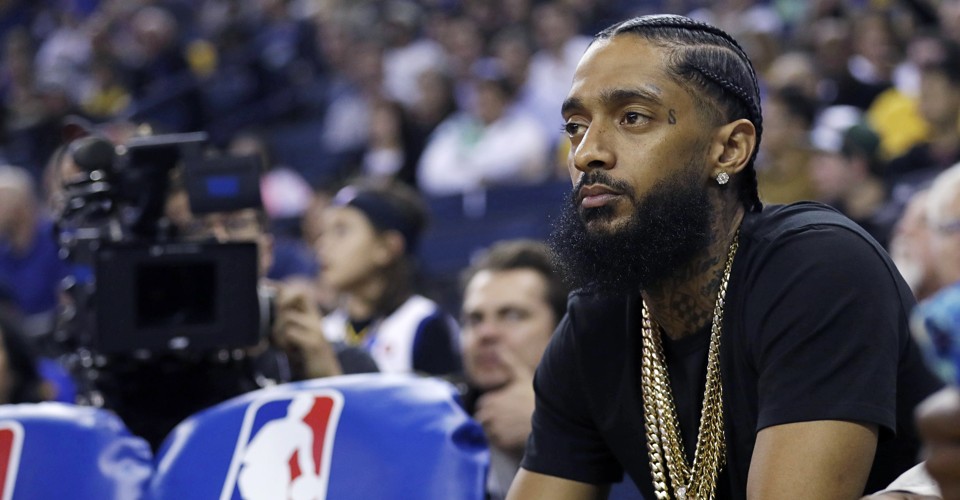 I didn't know Nipsey Hussle, but I knew Nipsey Hussle. Hussle's murder in his Los Angeles neighborhood last Sunday was a heartbreaking conclusion to an unfortunately common story. Another talented young black man was senselessly killed, police say, by another black man, leaving behind mourning families and communities that have become accustomed to absorbing such standard trauma. It hurts to see this version of a black life not mattering. But part of making any kind of sense of Hussle's death means keeping it real about the ruthless violence plaguing far too many African American communities, including the neighborhood Hussle was committed to transforming and saving. Soon after Hussle's death, conspiracy theories flooded the internet. The entertainer Nick Cannon seemed to allude to this in an Instagram post in which he pledged to continue Hussle's community work. Cannon wrote in a lengthy post, "Because they can't kill us all! Spiritual Warfare is REAL and in full effect." Even Hussle's final tweet—"Having strong enemies is a blessing"—is drawing comparisons to when Malcolm X predicted his own assassination. Read: Nipsey Hussle's death amplifies his commitment to activism Hussle preached ownership and advocated strengthening the financial base in forgotten black communities. He wanted to create avenues for young black people to better their lives and reshape their world. But Hussle wasn't killed because he was a symbol of black liberation. He was killed because, as the old adage goes, not everyone in your circle is necessarily in your corner. These conspiracy theories were so easy for some to grasp because the truth is much more difficult to accept. Hussle was killed right outside his own clothing store in broad daylight. The Los Angeles police have asserted that a 29-year-old suspect named Eric Holder murdered Hussle over a personal beef. TMZ cited unnamed law-enforcement sources as saying that Holder, who was captured after a two-day manhunt, had resorted to violence because he felt disrespected by Hussle. If Hussle hadn't been a well-known rapper, the story of his death would be sadly ordinary because of the grim statistics on the proliferation of violence in the black community. According to FBI crime statistics, more than 15,000 Americans were murdered in 2017, and a staggering 51.9 percent of the victims were black. Although violent crime has decreased in Los Angeles in the past year, Hussle's death, unfortunately, was part of a recent wave of violence in the South Los Angeles area where the rapper operated his business. Last week, 26 people were shot, and 10 died. Read: Nipsey Hussle's Eritrean American dream The most recent crime statistics in Los Angeles show that despite the fact that blacks account for just 8 percent of the city's population, they make up 36 percent of homicide victims. Compare that with the homicide rate for whites, who are 29 percent of the Los Angeles population, but only 5 percent of the city's homicide victims. Even though the plague of violence in African American communities has been known for years, it's more comforting to think that—as one theory went—Hussle's death was tied to the documentary he was working on about the controversial Honduran healer Alfredo Bowman, better known as Dr. Sebi. Before dying in 2016, Bowman claimed to have herbal cures for arthritis, AIDS, and diabetes, as well as other, terminal diseases. For years, conspiracists have pushed the idea that Bowman was killed because he was a threat to big pharmaceutical companies. For another group of conspiracists, it's more comforting to think that, because Hussle joined with the real-estate developer David Gross to open a co-working space and STEM center in his old Crenshaw neighborhood, and was scheduled to meet with the Los Angeles police to discuss solutions for curbing gang violence in South L.A., the establishment feared him so much that it took his life. (Don't even ask why the establishment would cut him down for preventing violence.) There are certainly plenty of precedents for black leaders and change agents dying long before they should have. Shamefully, there are too many examples of our own government abusing its power to undermine those who dared to challenge the status quo. African Americans haven't forgotten that the FBI spied on Martin Luther King Jr. and worked tirelessly to discredit him and other civil-rights leaders because of their growing power. The murders of Tupac Shakur and Notorious B.I.G. still haven't been solved. Six activists tied to the protests in Ferguson, Missouri, nearly five years ago have died. Not surprisingly, some people don't trust the police's word that the activists' deaths are unrelated to one another. A Ferguson activist named Cori Bush recently told the Associated Press she has faced significant harassment in the wake of the protests, including someone shooting into her car with her then-13-year-old daughter inside. "They shut us up, and they win," Bush said. But in Hussle's case, wasting time furthering conspiracy theories is only a distraction from unpacking why so many African American boys and men are victimized by violence, or see it as the only way to resolve conflict. There are a number of reasons for it: lack of access to real opportunity, the poor education systems that are a staple in so many urban environments, the stench of white supremacy. Still, let's also not lose sight of the fact that black masculinity is complex but at times riddled with toxicity. So many black boys and men see their manhood as their last stronghold in a world that all too often shows that it does not value or protect them. Hussle, who spoke openly about his affiliation with the Rollin' 60s, a Los Angeles gang, wanted to show members of a vulnerable community that he genuinely cared about their well-being, so that maybe some of them wouldn't feel the need to resort to their worst instincts. Hussle was a great example of possibility. Once he started coming into his own success, he reached back to provide bootstraps to those who never had any. There are dynamics in place that make it more difficult for black men such as Hussle to rise above the structural barriers that are constant roadblocks to their success. But it is also true that on a daily basis, black boys and men are being conditioned to exact the punishment that's been heaped on them. And little thought is given to what's being destroyed in the process. We want to hear what you think about this article. Submit a letter to the editor or write to letters@theatlantic.com.  Jemele Hill is a staff writer for The Atlantic, where she covers sports, race, politics, and culture.  |
| You are subscribed to email updates from "black plague facts" - Google News. To stop receiving these emails, you may unsubscribe now. | Email delivery powered by Google |
| Google, 1600 Amphitheatre Parkway, Mountain View, CA 94043, United States | |


Comments
Post a Comment