Tuberculosis (TB): Background, Pathophysiology, Etiology

Invalid Access Key! Invalid Access Key!
“More Cases of Bubonic Plague Recorded in China and Mongolia - Newsweek” plus 2 more |
| More Cases of Bubonic Plague Recorded in China and Mongolia - Newsweek Posted: 29 Sep 2020 04:27 AM PDT More bubonic plague cases have been recorded in Mongolia and China as a 25-year-old woman contracted the disease after eating marmot meat and a three-year-old boy became infected amid a rat outbreak. The 25-year-old female patient from Khovd province in the west of Mongolia has now been placed in isolation at a local hospital, as have 19 of her close contacts, the country's National Center for Zoonotic Diseases (NCZD) said in a statement. The NCZD said the woman had recently eaten marmot meat and lab testing subsequently confirmed that she had contracted bubonic plague—a disease caused by infection with the bacteria Yersinia pestis, which can be found in wild rodents and the fleas that feed off them. This year, Mongolia has reported a total of 22 suspected plague cases, of which six have been confirmed with laboratory testing. Three of these patients died as a result of the disease. Bubonic plague cases have also emerged recently in China. On Sunday, the Yunnan Center for Disease Control and Prevention confirmed a three-year-old boy in the province had contracted bubonic plague, state-run daily newspaper the Global Times reported. The boy's case was discovered during a nationwide screening program initiated after an outbreak of the disease was discovered among rats in Menghai county. In response, the local government declared a level IV emergency, which is the lowest in China's four-tier public health alert system in terms of significance. As part of the public health response, Menghai county has set up a team that is carrying out inspections, as well as eradicating rodents and their fleas, Global Times reported. Authorities are also urging residents to promptly report any contact with dead rodents and to immediately seek medical advice if they begin to develop fever-like symptoms. China has recorded two deaths from bubonic plague this year. Both of these were in the region of Inner Mongolia, which borders Mongolia. Without treatment, bubonic plague has a fatality rate of 30 to 60 percent, although modern antibiotics are effective at treating the disease if administered promptly, World Health Organization data shows. Being bitten by an infected flea is the most common way for humans to contract the disease but transmission can also occur via direct contact with the tissue of an animal infected with plague, either dead or alive. The most recent plague death in Mongolia came earlier this month when a 38-year-old man from Khovsgol province in the north of the country died after eating infected marmot meat, China's state-run news agency Xinhua reported. In August, a 42-year-old man died from bubonic plague in Khovd province. And in July, a 15-year-old boy passed away from the disease in the western province of Govi-Altai. The NCZD has said that 17 out of 21 Mongolian provinces are at risk of plague outbreaks.   |
| Boy Suspected of Contracting Bubonic Plague in China - Bloomberg Posted: 27 Sep 2020 12:00 AM PDT [unable to retrieve full-text content]Boy Suspected of Contracting Bubonic Plague in China Bloomberg  |
| Plagues, pandemics dispense lessons and change - University of Miami Posted: 08 Sep 2020 12:00 AM PDT 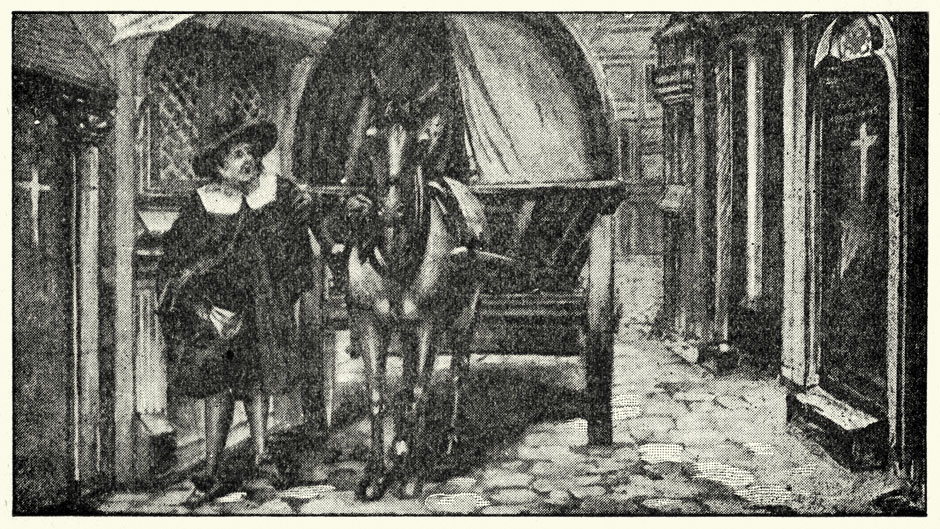 Hugh M. Thomas, professor of history, provides a perspective on the Black Death that devastated Europe in the Middle Ages and what it and the current pandemic have taught society. The Black Death swept through Europe in 1347, carried by fleas on black rats, and killed 25 million or more—at least one-third of the European continent. The Spanish Flu of 1918, which came in three waves, killed around 50 million people worldwide. Nearly 675,000 of those deaths were in the United States. Pandemics, such as those caused by the COVID-19 virus, can wreak havoc and leave behind many deaths, diminished economies, and displaced citizens. But there are lessons to be taken from them. Hugh M. Thomas, professor of history and director of the Center for the Humanities at the University of Miami, previously gave a seminar, "The Black Death to Coronavirus," where he explored the history of plagues. By far, the deadliest of the plagues was the Black Death, he said. Although exact figures are not known, it killed as much as 50 percent of the population in many areas. A city like Florence, in Italy, lost almost 70 percent of its population; a small village in England lost the same percentage of its residents. "Think of a situation where half of your family was gone or half of your friends were gone," he said. The Black Death was a bacterial pandemic unlike COVID-19, which is a virus. It entered the system and attacked the lymph nodes. Bulbous eruptions would appear throughout the body accompanied by fever, headaches, and chills. Since there was no medical know-how at the time, many of its victims died days after having contracting the disease. The plague would stick around for about six weeks either killing or leaving others with herd immunity, said Thomas. To the medieval mind—which did not have knowledge of germs or bacteria—the advent of plagues left them perplexed. Some thought it was due to "bad air;" others attributed it to unusual alignments in the astrological realm, according to Thomas. Some believed that Jews were poisoning water wells, and some 2,000 Jews were burned in Strasbourg, France, because of this belief, Thomas explained. Others believed that God was angry with humanity and had sent the disease as punishment. But the pandemic also brought some positive news—especially for the peasants. Prior to the plague, they toiled in the fields for low wages and lived in modest quarters. After the Black Death, there was a surplus of land and "if you were a landlord who needs tenants to farm the land, you have half the work force available," Thomas said. "Peasants would still be tenants, but they could expand on the land and have more food, better shelter, and clothing," Thomas added. "They were less likely to starve." The Black Death did not have many political ramifications. "Wars kept going on but with less soldiers," he said. For medieval people pandemics were almost supernatural. They did not have the scientific knowledge to understand its origins and ways to contain it. Thomas believes that current generations can learn from the COVID-19 pandemic, even if it is very different from the Black Death. According to Thomas, our economy is complex; so, it will be more difficult to stabilize than medieval economies. But in the long term, there will have been much less impact for society since the mortality numbers are much less than with the Black Death. Certainly, in the short term, society must realize that it is a blessing to have modern medicine, he noted. Yet more resources must be allocated to prepare for the next plague—including more research and more work to develop a vaccine, Thomas added. There is another lesson to be learned from this, the history professor pointed out. "Trust in professionals is an important lesson to take from this," said Thomas. "Medical professionals are learning lessons that will help us with the next pandemic. Next time it happens, people should listen to public health officials that have learned from this and can draw lessons from it."  |
| You are subscribed to email updates from "plague disease" - Google News. To stop receiving these emails, you may unsubscribe now. | Email delivery powered by Google |
| Google, 1600 Amphitheatre Parkway, Mountain View, CA 94043, United States | |


Comments
Post a Comment