Bronchiectasis – a guide for primary care

Invalid Access Key! Invalid Access Key!
“Here's a look at some of history's worst pandemics that have killed millions - KGO-TV” plus 1 more |
| Here's a look at some of history's worst pandemics that have killed millions - KGO-TV Posted: 28 Feb 2020 06:17 PM PST  SAN FRANCISCO -- Health officials are warning that the deadly novel coronavirus outbreak, also known as COVID-19, has the potential to become a global pandemic. A pandemic will expose everyone to an infection, and a proportion of the population will fall sick. The word pandemic comes from the Greek word "pandemos," which means everybody. "Pan" meaning everyone, "demos," population. We broke down the terms you need to know and also took a closer look at the world's worst infections that have killed millions. What is a pandemic? According to the World Health Organization, a pandemic is the "worldwide spread" of a new disease. The US National Institutes of Allergy and Infectious Diseases does no use a scientific or definitive definition of what constitutes a pandemic. What is an outbreak? How is that different than an epidemic? The most severe pandemic in recent history was the 1918 influenza pandemic, often called the "Spanish flu." The pandemic was estimated to have infected about 500 million people, one-third of the world's population at the time, and killed roughly 50 million people worldwide. Pandemics are part of human history. According to the Centers for Disease Control, there have been at least four pandemics of influenza ("the flu") in the 19th century, and three in the 20th century. Here's a look at some of history's worst pandemics. The Spanish FluThe Spanish flu was an influenza pandemic that spread around the world between 1918 and 1919, according to the CDC. It was caused by an H1N1 virus, with an avian (bird) origin, though it's unclear exactly where the virus originated. The CDC estimates that about 500 million people (or one-third of the world's population) became infected with the virus. It ultimately caused at least 50 million deaths worldwide with about 675,000 deaths happening in the U.S. The Black DeathThe Black Death, was one of the most devastating pandemics in human history, resulting in the deaths of an estimated 75 to 200 million people across Europe and Asia, between 1347 to 1351. The Black Death re-surfaced in London in 1665 for the Great Plague of London, killed 20% of London's population, in just 18-months, an estimated 100,000 people died. Asian FluAccording to the CDC, the "Asian Flu" began in East Asia in 1957. The influenza virus was an H2N2 strain, first discovered in Singapore. From there, the virus made its way to Hong Kong and to the coastal cities in the United States. Of the 1.1 million people who died of the Asian flu worldwide, 116,000 of them were in the United States. Hong Kong FluThe Hong Kong flu pandemic of 1968 originated in China. Caused by an influenza A virus (H3N2), it was the third pandemic flu outbreak to occur in the 20th century, killing one million people worldwide, 100,000 in the United States. Swine FluThe "swine flu" occurred in 2009 with a novel influenza virus, H1N1. According to the CDC, the virus was actually first detected in the US, and spread quickly across the US and the world. Between April 12, 2009 and April 10, 2010, there were 60.8 million cases reported, 274,304 hospitalizations, and 12,469 deaths due to the virus. The CDC estimates 575,400 people died worldwide. HIV/AIDSHuman immunodeficiency virus, HIV, and acquired immunodeficiency syndrome, AIDS, were first discovered in the early 1980s. AIDS was first detected in American gay communities but it's thought to have developed from a chimpanzee virus from Africa in the 1920s. According to the World Health Organization, 75 million people have been infected with the virus since it was discovered, resulting in 32 million deaths worldwide. An estimated 38,000 new HIV infections still happen in the U.S. each year. RELATED STORIES & VIDEOS: Copyright © 2020 KGO-TV. All Rights Reserved.  |
| Mass grave shows how Black Death devastated the countryside - The Guardian Posted: 18 Feb 2020 12:00 AM PST 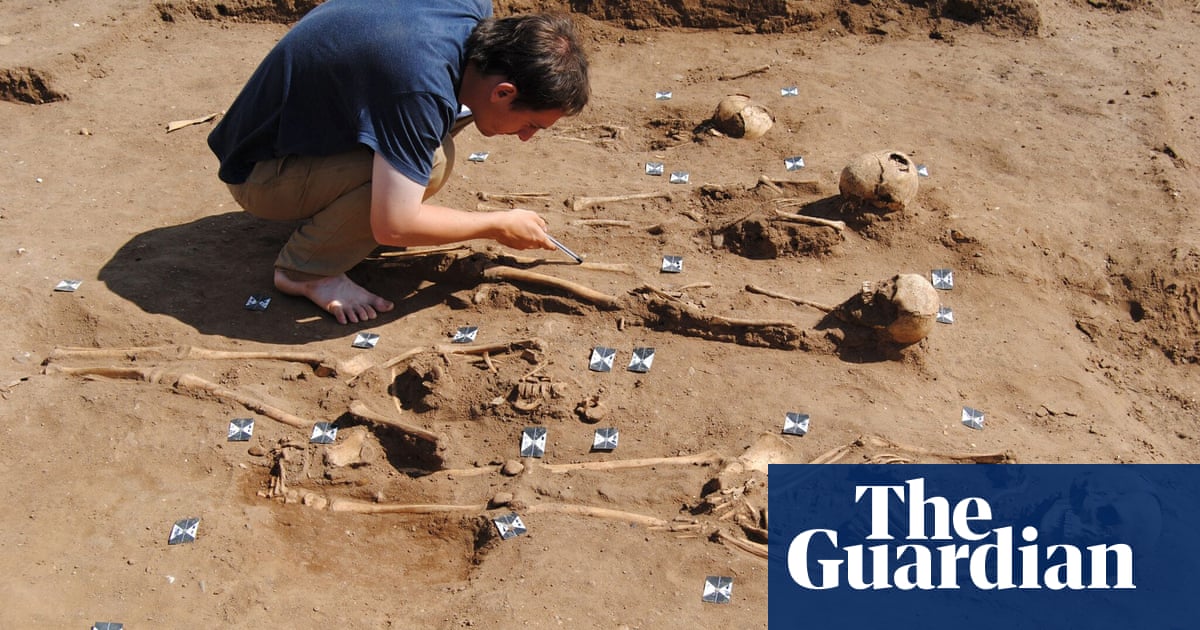 A mass grave containing the remains of dozens of victims of the Black Death offers chilling new evidence of the speed and scale of the devastation the plague brought to rural England, according to archaeologists. The grave, discovered in a remote corner of rural Lincolnshire, has been dated to the 14th century, almost certainly to the earliest and deadliest medieval outbreak of the disease in 1348-9. It contained the bodies of at least 48 men, women and children who were laid in a sandy pit within days of each other. DNA tests on the bodies found the plague pathogen, confirming how they died. About half the population of England was wiped out within 18 months by the 1348-9 pandemic. Perhaps surprisingly, however, direct archaeological evidence for the Black Death is extremely rare, according to Hugh Willmott, senior lecturer in European historical archaeology at the University of Sheffield, who led the excavation. While a small number of plague mass graves have been excavated in London, he said, nothing comparable has ever been found in a rural context, making this a discovery of national importance. Analysis of the find, made in 2013, has been published for the first time in Antiquity. "One of the assumptions in the past has been that perhaps you get mass graves in towns where you have a higher density of people, [whereas] in villages people were being buried as normal in the parish churchyard," said Willmott. "But actually what this suggests is that this was a rural community that couldn't cope, and when the Black Death arrived, the normal system for doing things broke down." The grave was discovered by chance during a survey of the now-ruined Augustinian priory of Thornton Abbey, close to Immingham in north Lincolnshire, on the east coast of England. Nearby, archaeologists found the site of a medieval hospital attached to the priory, suggesting the dead or dying had been brought there in desperation as the plague struck, overwhelming the canons who were then forced to bury them together. "People couldn't be buried in the parish graveyard – perhaps the priest or the gravedigger has died – [so] you turn to the church, the canons at the abbey down the road. This is a snapshot of a not often seen rural catastrophe." While the layout of the bodies showed they had all been buried within a period of days, said Willmott, they had not been flung without ceremony into a shared pit. Instead, the victims – more than half of whom were children – were shrouded and laid carefully side by side. "They are trying to treat them as respectfully as possible, because in the middle ages it's very important to give the dead a proper burial. Even though it is the height of a terrible disaster, they are taking as much care as they can with the dead."  |
| You are subscribed to email updates from "black death" - Google News. To stop receiving these emails, you may unsubscribe now. | Email delivery powered by Google |
| Google, 1600 Amphitheatre Parkway, Mountain View, CA 94043, United States | |


Comments
Post a Comment