The role of neutrophil response in lung damage and post-tuberculosis lung disease: a translational narrative review

Invalid Access Key! Invalid Access Key!
“Black Death Plague That Killed More Than Half Of Europe Traced Back To Its Source - IFLScience” plus 2 more |
| Black Death Plague That Killed More Than Half Of Europe Traced Back To Its Source - IFLScience Posted: 03 Oct 2019 03:52 AM PDT DNA analysis of human remains from across nearly a dozen European archaeological sites has led an international team of scientists to believe that the Black Death spread to the continent from Russia. Beginning in the 14th century, the Bubonic plague decimated Europe. Historical accounts suggest the bacteria responsible for the plague, Yersinia pestis, arrived at the continent via a dozen ships from the Black Sea docked in Italy, according to History.com. When the ships arrived, most of the sailors were dead and those who were still alive were riddled with horrific black boils oozing with blood and pus. In just five years, 20 million people would die from Y. pestis – nearly one-third of the population. Waves of the Black Death would taunt Europe over the next several centuries, all the while teasing researchers trying to determine where it came from. Until now. To determine where the plague-causing bacterium came from, and to trace its evolution, researchers reconstructed the genomes of the bacterium extracted from 34 individuals found at burial sites in England, France, Germany, Switzerland and two from the Volga region of Russia. Of the samples taken, the bacteria lacked genomic diversity and the single Russian strain was found to be ancestral to all of those ancestral to the pandemic strains. "These findings indicate a single entry of Y. pestis into Europe through the east," explains first author Maria Spyrou in a statement. "However, it is possible that additional interpretations may be revealed with future discoveries of un-sampled diversity in western Eurasia,"  Analyses from genomes later in the pandemic showed a higher genetic diversity, suggesting that perhaps it evolved after the initial plague swept Europe. "In the later phase of the second pandemic, we see the development of multiple branches within Europe, which suggests that plague was maintained in different local foci," said study co-author Marcel Keller. "No modern descendants of this lineage have been found to date, possibly indicating the extinction of these reservoirs." Y. pestis is spread from person to person through the air, as well as from bites from fleas or rats. severe symptoms include onset pf fever, headaches, chills, and painful lymph nodes, according to the Centers for Disease Control and Prevention. Today the strain is treatable with antibiotics, but 700 years ago people neither knew what prompted the onset or how to cure it. The researchers say their work gives new insights into how the pandemic transpired. "We have shown that extensive analysis of ancient Y. pestis genomes can provide unique insights into the microevolution of a pathogen over a period of several hundred years," said senior author Johannes Krause, adding that integrating their work into disease modeling, paired with data from other areas like climate science and history, will help to understand how infectious diseases spread. In recent years, Y. pestis has been spotted in Colorado Prairie Dogs, in a small Chinese town, in Mongolia after a couple ate raw marmot, killed dozens in Madagascar, and was rumored to be on New York Subways (though that was later proven false).  |
| An Ancestral Genome of The Plague Has Been Traced Back to Russia - ScienceAlert Posted: 03 Oct 2019 12:28 AM PDT 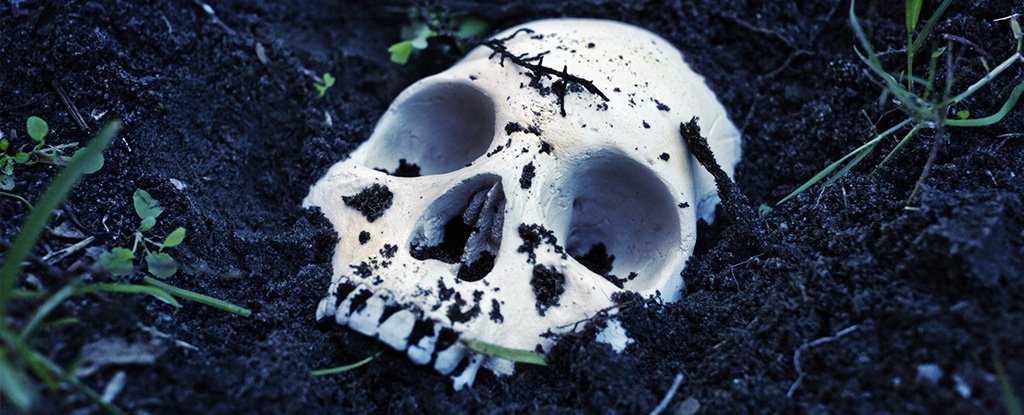 The Black Death was only the beginning. Countless millions perished in this terrible early wave – an estimated 60 percent of Europe was wiped out – but the virulent bacterium responsible was never actually contained. When the Black Death of the mid–14th century was over, Yersinia pestis was far from done, laying waste to human life for another 500 years. This grim, recurring saga of outbreaks – called the second plague pandemic – lasted until the 19th century. But where did its deadly antagonist originate? In a new study, an international team of scientists reconstructed 34 Y. pestis genomes sourced from the teeth of 34 individuals who died in 10 different countries – tracing a kind of genetic family tree of shadowy pestilence spanning the 14th to 17th centuries. The family tree, encompassing the remains of people who were infected by the bacterium in England, France, Germany and elsewhere, reveals a diversification of the Y. pestis lineage over time into multiple genetically distinct clades. Nonetheless, these clades appear to have one common starting point. "These findings indicate a single entry of Y. pestis into Europe through the east", says archaeogeneticist Maria Spyrou from the Max Planck Institute for the Science of Human History, on the basis that one strain in particular looks to be the ancestor of all the second plague pandemic strains that came after it. The precursor, the researchers say, came from Russia, specifically a town called Laishevo in the historical Volga region, based on the evidence of a sample known as LAI009. "Our phylogenetic reconstruction shows that the LAI009 isolate from Laishevo is ancestral to the Black Death isolates from southern, central, western and northern Europe, as well as to the previously published late 14th-century isolates from London and Bolgar City," the researchers explain in their paper. "We interpret LAI009 as the most ancestral form of the strain that entered Europe during the initial wave of the second pandemic that has been identified to date." Of course, in reconstructions like this, conclusions are necessarily limited by the scope of skeletal remains you get to dig up and study. In other words, the researchers acknowledge it's entirely possible that the pestilence – in this era of history, at least – may have had earlier forms in other places that have not yet been sufficiently tested. "It is possible that additional interpretations may be revealed with future discoveries of unsampled diversity in western Eurasia," Spyrou says. In any case, once the Russian strain took hold in the early stages of the second plague pandemic, it branched off into multiple variant forms over the following centuries. Modern descendants of these variants have never been found, the team says, suggesting they have become extinct. While the new findings cannot be truly definitive about the ancestor of the Black Death outbreak, they do nonetheless illustrate the earliest known genetic origins of what became a 500-year plague – telling us more about an ancient pathogen that existed long before the Black Death's medieval shadow, and still darkens our days even now. For such a persistent and powerful companion to humanity, there's probably no such thing as too much information. If we must share the planet with Y. pestis, we need all the intel we can get. "The second plague pandemic has arguably caused the highest levels of mortality of the three recorded plague pandemics," the researchers write. "It serves as a classic historical example of rapid infectious disease emergence, long-term local persistence and eventual extinction for reasons that are currently not understood." The findings are reported in Nature Communications.  |
| News at a glance - Science Magazine Posted: 03 Oct 2019 10:44 AM PDT  SummaryIn science news around the world, the European Space Agency chooses a new satellite mission—the Far-infrared Outgoing Radiation Understanding and Monitoring, to be launched in 2026—that will collect key missing data needed to predict more accurately the pace of climate change. The U.S. Department of Justice releases the first rules about when police using federal funding can use genetic ancestry databases to track down crime suspects. An association of scientific societies in China unveils a 5-year plan to develop world-class science and technology journals managed by Chinese organizations. A watchdog agency reports financial conflicts of interest that could bias researchers funded by the U.S. National Institutes of Health are rare; only about 3% of 55,600 grants awarded in 2018 involved a researcher with a "significant" financial interest.  |
| You are subscribed to email updates from "what was the black plague" - Google News. To stop receiving these emails, you may unsubscribe now. | Email delivery powered by Google |
| Google, 1600 Amphitheatre Parkway, Mountain View, CA 94043, United States | |


Comments
Post a Comment