Tuberculosis (TB): Background, Pathophysiology, Etiology

Invalid Access Key! Invalid Access Key!
How the Plague Reshaped the World - JSTOR Daily |
| How the Plague Reshaped the World - JSTOR Daily Posted: 30 May 2019 10:15 AM PDT "The plague" conjures up images of the Black Death of Europe in the fourteenth century. This apocalyptic pestilence became known as the "black death" because infected people often developed buboes, swollen lymph nodes in the groin and neck, that turned black. Europe's population was halved in four years. But that doesn't cover the half of it. The pandemic also swept through Africa, the Middle East, and Asia. Some estimates of mortality go as high as two hundred million. This notorious pandemic was actually the second of its kind. An earlier outbreak beginning in 541 halved the population of the Roman empire and hurried along its demise. As many as 5,000 people died per day in Constantinople. Even the Emperor Justinian I got it, but he was one of the lucky who survived. The third outbreak in China and India in the 1890s was the last major plague pandemic, claiming twelve million lives, mostly in India. The disease, which develops quickly and can kill within days, was fatal in the majority of cases. Though treatable with antibiotics today, the disease has not been eradicated. Harbored in various small mammal species, plague is still found around the world. Between 2010 and 2015, the WHO counted 3,248 cases and 584 deaths, including a handful in the U.S. 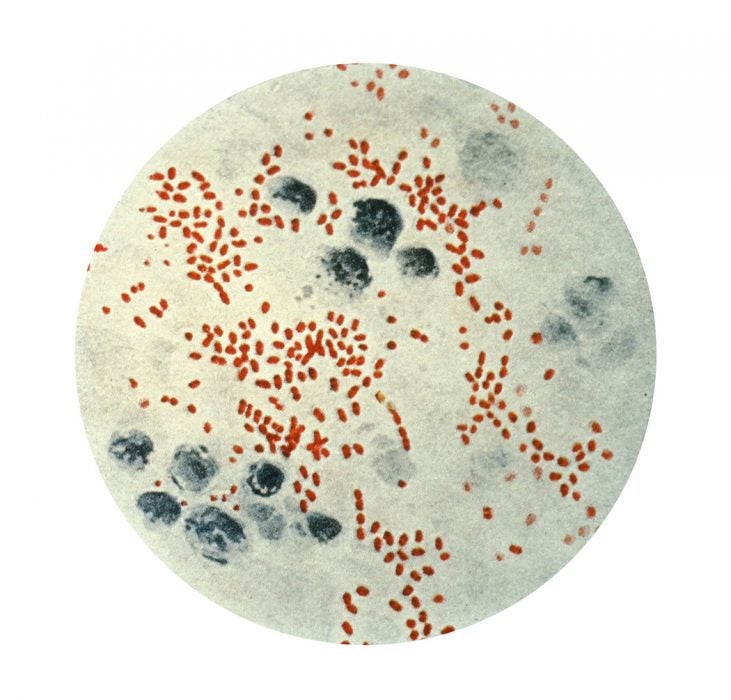 The third pandemic is the reason we know what causes this nasty disease: a rod-shaped bacillus named Yersinia pestis. Once inside a human host, it reproduces feverishly, overwhelming the immune system. As infectious disease expert Thomas Butler explains, the bacillus was named after Swiss scientist Alexandre Yersin (1863-1943). Yersin discovered it in 1894 in Hong Kong:
Since Yersin's time, we've learned a lot more about this killer. Bubonic plague is spread by fleas that transfer the bacillus from animal host to humans. (There is some debate about the place of rats in the disease's rapid spread during the Black Death.) Pneumonic plague infects via airborne droplets and septicemic plague contaminates tissues/fluids. These last two forms have even higher mortality rates than the bubonic type. Weekly DigestIt also turns out that Y. pestis is a very recent life form. There are some eighteen species of bacteria in the Yersinia genus. A couple of these species can make you sick—the intestinal infection is called yersiniosis—and these have been around for millions of years. They are not usually deadly. But Y. pestis emerged less than 6,400 years ago. It's very much a post-Ice Age, Holocene life form, a deadly companion of modern humans. Butler notes that the plague is still alive and well amongst certain wild mammals.
The plague has radically reshaped the human world more than once. And it's just sitting out there right now, moving around our fellow mammals.  |
| You are subscribed to email updates from "pneumonic plague" - Google News. To stop receiving these emails, you may unsubscribe now. | Email delivery powered by Google |
| Google, 1600 Amphitheatre Parkway, Mountain View, CA 94043, United States | |


Comments
Post a Comment