Pulmonary Immune Dysregulation and Viral Persistence During HIV Infection

Invalid Access Key! Invalid Access Key!
“New China virus: Cases triple as infection spreads to Beijing and Shanghai - BBC News” plus 2 more |
| New China virus: Cases triple as infection spreads to Beijing and Shanghai - BBC News Posted: 20 Jan 2020 04:56 AM PST  Image copyright EPA Image copyright EPA The number of people infected with a new virus in China tripled over the weekend, with the outbreak spreading from Wuhan to other major cities. There are now more than 200 cases, mostly in Wuhan, though the respiratory illness has also been detected in Beijing, Shanghai and Shenzhen. Three people have died. Japan, Thailand and South Korea have reported cases. The sharp rise comes as millions of Chinese prepare to travel for the Lunar New Year holidays. Health officials have identified the infection, which first appeared in Wuhan in December, as a strain of coronavirus. They say it has led to an outbreak of viral pneumonia, but much about it remains unknown. Although the outbreak is believed to have originated from a market, officials and scientists are yet to determine exactly how it has been spreading. The outbreak has revived memories of the Sars virus - also a coronavirus - that killed 774 people in the early 2000s across dozens of countries, mostly in Asia. Analysis of the genetic code of the new virus shows it is more closely related to Sars than any other human coronavirus. Experts in the UK told the BBC the number of people infected could still be far greater than official figures suggest, with estimates closer to 1,700. What we know about the virus
Source: World Health Organization Who has been infected?Authorities in Wuhan, a central Chinese city of 11 million that has been at the heart of the outbreak, on Monday said 136 new cases had been confirmed over the weekend, with a third person dying of the virus. There had previously been only 62 confirmed cases in the city. As of late Sunday, officials said 170 people in Wuhan were still being treated in hospital, including nine in critical condition. Beijing also confirmed its first cases, with five people infected. Shanghai confirmed its first case on Monday - a 56-year-old woman who came from Wuhan. In the city of Shenzhen, a major tech hub close to Hong Kong, officials said a 66-year-old man showed symptoms of the virus following a trip to visit relatives in Wuhan. State media reported 14 other cases in Guangdong province. Four cases have been confirmed abroad - two in Thailand, one in Japan and one in South Korea - all of them involving people who are either from Wuhan or have visited the city. In South Korea, the Korea Centers for Disease Control and Prevention said a 35-year-old Chinese woman was suffering from a fever and respiratory problems after travelling there from Wuhan. She was put into isolation and treated at a local hospital. The World Health Organization said it was currently not recommending restrictions on travel or trade, but was providing guidance to countries preparing for any outbreak. Airports in Singapore, Hong Kong and the Japanese capital Tokyo have been screening air passengers from Wuhan, and US authorities last week announced similar measures at three major airports in San Francisco, Los Angeles and New York. What are the Chinese authorities saying?How China is responding to the outbreak is under close scrutiny, given that it was widely criticised for initially covering up the Sars crisis in late 2002 and early 2003. On Monday, Chinese President Xi Jinping for the first time publicly addressed the outbreak, saying that the virus must be "resolutely contained". The foreign ministry, meanwhile, said China was providing "timely information about the disease" and would "work with all parties to deal with the virus". State media has been urging citizens not to panic and on Sunday the National Health Commission said the virus was "still preventable and controllable" although close monitoring was needed. It said there had been no cases of the virus spreading from one person to another, but that it had instead crossed the species barrier and come from infected animals at a seafood and wildlife market in Wuhan. However the WHO said it believed there had been "some limited human-to-human transmission occurring between close contacts". "As more… cases are identified and more analysis undertaken, we will get a clearer picture of disease severity and transmission patterns," it wrote on Twitter. It noted that the rise in cases in China was a result of "increased searching and testing for [the virus] among people sick with respiratory illness".  Media playback is unsupported on your device What impact could Lunar New Year have?From Friday, most Chinese will begin their week-long Lunar New Year holidays. It's a time when hundreds of millions travel around China to visit family, raising fears that authorities will not be able to adequately monitor further spread of the disease. Wuhan is a transport hub and authorities there have for nearly a week been using temperature scanners at airports, and train and bus stations. Those showing signs of fever have been registered, given masks and taken to hospitals and clinics. Authorities say they will now also be screening everyone leaving the city. At Beijing's central railway station, some travellers donned masks but did not appear overly concerned about the virus. "Watching the news, I do feel a little worried. But I haven't taken precautionary measures beyond wearing regular masks," Li Yang, a 28-year-old account manager travelling to the region of Inner Mongolia, told the AFP news agency. But the tone in Chinese social media, where the outbreak has been a top trending topic, was different. "Who knows how many people who have been to Wuhan may be unaware that they have already been infected?" one Weibo user said. What is your question about coronavirus in China? Use the form below to submit your question: If you are reading this page on the BBC News app, you will need to visit the mobile version of the BBC website to submit your question on this topic.  |
| China Reports 3rd Death, 136 New Infections, Due to Viral Pneumonia - The Epoch Times Posted: 19 Jan 2020 12:46 PM PST Chinese authorities on Jan. 19 reported one new death as a result of a viral pneumonia. Also, another 136 patients were infected, raising the global number of infections to more than 200. That is the largest increase since the virus first emerged in the central Chinese city of Wuhan in late December. The pneumonia disease has killed three so far, all from Wuhan. The city's Ministry of Health said that the new patients, aged from 25 to 89, were infected before Jan. 18. As of Sunday, at least 170 people remained in Wuhan hospitals for centralized treatment, with 35 of them in serious condition and nine critically ill. The officials said they are also monitoring 90 others who had close contact with the patients. Some 700 miles away from Wuhan, Beijing also confirmed two cases of infection on Sunday, and Guangdong Province in southern China confirmed one case, marking the first confirmation that the virus has spilled to other parts of the country. The two patients in Beijing have recently been to Wuhan, according to state media. Thailand confirmed two cases of the new viral pneumonia, while Japan has reported one. All had recently traveled to Wuhan. 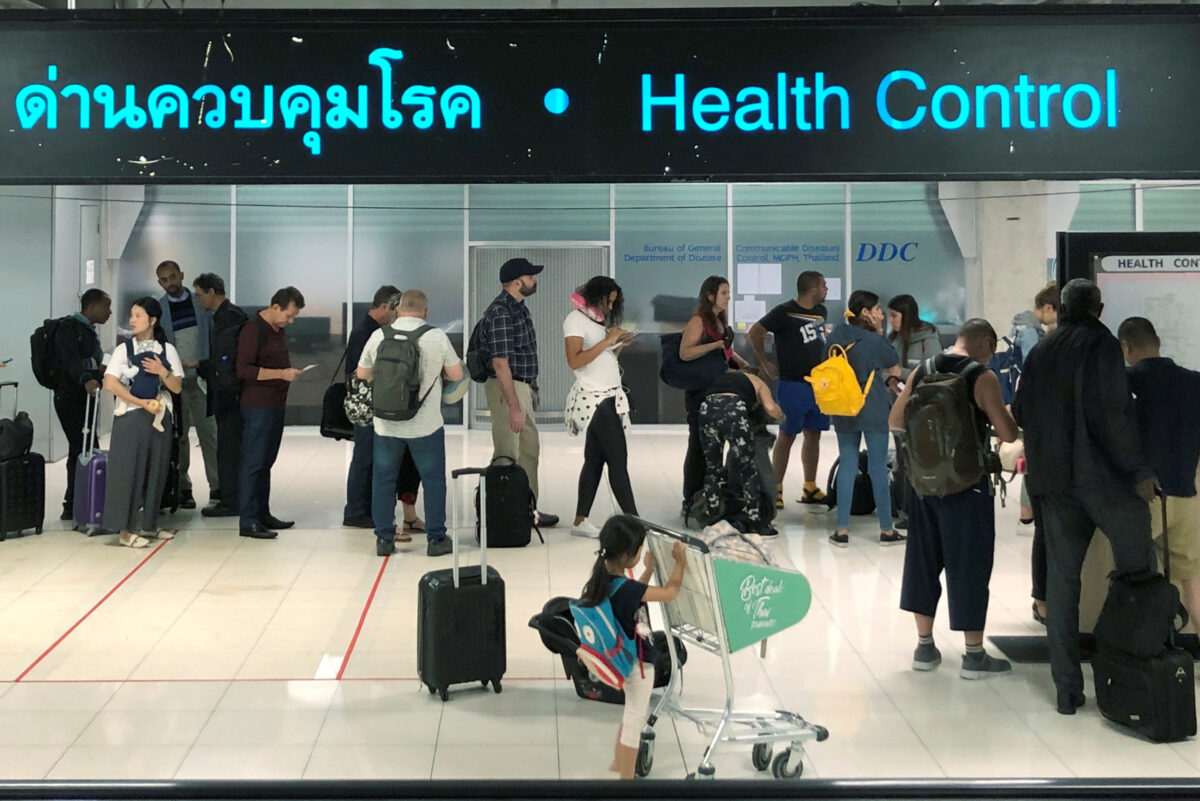 Shenzhen, a southern city bordering Hong Kong, has also isolated two patients suspected of carrying the Wuhan virus. The new numbers rolled in just as Canadian and U.S. health authorities both began screening passengers from Wuhan at three of each country's biggest airports. Other countries, including Singapore, South Korea, Thailand, Indonesia, Malaysia, the Philippines, and Taiwan, have also announced measures to strengthen entry detection measures as the Lunar New Year approaches: peak migration season when large numbers of Chinese travelers are going to travel across Asia.  Many More Cases PossibleThe Imperial College London's Medical Research Council Centre for Global Infectious Disease Analysis released a report on Jan. 17, in which researchers estimated that 1,723 people in Wuhan could potentially have the illness. The calculation was based on the number of infection cases outside of China, the number of passengers at the Wuhan airport, daily international passengers flying out of Wuhan, and the number of days before the international cases are discovered. One of the researchers, Neil Ferguson, said there is a possibility that the infection numbers may be significantly underreported in China. A likely reason for the large discrepancy between the report's estimate and the officially reported data is that the infection is in fact "widely disseminated across the population," Ferguson said in an interview with The Epoch Times. He noted that the Chinese authorities' testing was insufficient, largely concentrating on people with exposure to a live animal and seafood market in the city, which authorities have linked with the spread of the disease. "They should be getting widespread testing of people reporting respiratory diseases with pneumonia hospitals across the city," he said.  Human Transmission?Some of the patients in Wuhan, as well as the patients in Thailand and Japan, have not been to the seafood market, raising fears that the virus may be able to spread from person to person. Chinese officials, as well as the World Health Organization and the U.S. Centers for Disease Control and Prevention, have acknowledged a chance of human-to-human transmission. Ferguson also said it was possible. "If hundreds of people have been affected, it's quite unlikely to just be due to the exposure to the market … so some degree of human-to-human transmission is quite likely to have occurred," he said. "We know similar viruses and transmission is possible in some circumstances." He said that the current situation calls for more transparency and information sharing from the Chinese side in order to prevent its global spread. Ferguson also said this virus has similarities to SARS (severe acute respiratory syndrome) and MERS (Middle East respiratory syndrome), though it appears much milder in terms of threats.  |
| 5 cyber security tips to keep your web applications secure - Business MattersBusiness Matters Posted: 20 Jan 2020 02:31 AM PST An independent study in 2016 revealed that a hacker attack takes place every 39 seconds on average.What was even more alarming was that the computers that were observed in the study recorded an average of 2,200 attacks per day. Apart from revealing how aggressive hackers have become, these stats also highlight the important role that web application monitoring tools and services play in securing web applications. Hackers are often depicted in the movies to be in front of expensive-looking computer set-ups, trying to hack into a computer network manually. The reality, however, is that hackers often use automated programs and scripts that are programmed to scan thousands of computers simultaneously to look for vulnerabilities and weaknesses in security. Although not as cinematic as portrayed in the movies, this constant probing attack requires equally aggressive security measures. Why You Need to Protect Your Web ApplicationsIn-house app security has been struggling to stay one step ahead of hackers in recent years. Statistics on data breaches and server intrusions within the past few years provide further evidence that on-premises app security measures are incapable of providing sufficient protection for organizations. What makes web application protection even more vital is that most web app development processes usually forgo on-premises security solutions because it increases the complexity of the app development exponentially. Some organizations do employ several approaches to improve app security such as using software to review codes and manual testing. However, these approaches are severely wanting when it comes to addressing a wide app security threat surface. These are the reasons why hackers focus most of their efforts on web apps. Statistics also show that web applications are the primary attack vector for most hacking attempts, making up more than half of app-related data security breaches. It is therefore imperative for organizations and enterprises to employ tools and solutions in conducting regular tests and in monitoring web applications. The following are 5 very helpful tips for securing web applications for 2020. Employing Web App Monitoring Solutions and ServicesAcquiring tools and monitoring services for your web apps is one of the most vital steps that you should take to improve the security of your applications. Among the most important functions of web app monitoring tools is to scan for vulnerabilities in the applications. Those that are identified are quickly assessed for its level of risk, with the critical weaknesses being prioritized for resolution. Some vulnerabilities can also come in the form of old websites that are still partially live and web applications that the organization may have lost track of or have completely forgotten. App monitoring tools can also seek out these potential security leaks and shut them down. Tools that include automated random testing and analysis of web apps should also be able to help you further improve the security of your applications. Supplement Automated Scanning with a Manual Source Code AuditAutomated web application risk and security assessment tools can identify all technical vulnerabilities better and deliver faster results than even the most experienced penetration analyzer. However, such a tool will likely miss logical vulnerabilities, which can only be detected with a manual audit. Using both automated security assessment and manual source code edit will therefore be essential in identifying all types of vulnerabilities. It is important to note, however, that a manual audit can be time-consuming, costly, and can still miss some logical vulnerabilities. Test Throughout the SDLC ProcessIf you are building your own web application, you should start testing and detecting for vulnerabilities throughout the software development life cycle or SDLC. Hackers can only start scanning and probing your app for weaknesses when it becomes live. Therefore, you are beating them to the punch by looking for vulnerabilities prior to the deployment of the app. Developers who have access to the code can use a white box scanner, which gives them an advantage when identifying vulnerabilities before a web app becomes live. Learn More About How Vulnerabilities Can Be ExploitedThe methods of hackers may be constantly evolving, but they often probe for the most common web app vulnerabilities. It will do you well to understand the most common vulnerabilities that hackers often exploit. These include SQL injection attacks, broken authentications, cross-site scripting, weak deserialization and faking request scripts. Have Pros Try To Breach Your SecurityAfter assessing, testing and resolving the most critical vulnerabilities, the best way to test your security is to have pros help you try to hack into the app. However, make sure not to mess anything up and do the testing in an isolated environment to eliminate the risk of your host banning your IP when it detects that you are attacking your own web app. If All Else Fails…It is always best to prepare for the worst-case scenario such as an infection or the dreaded security breach. While a good number of host providers will have backups of your website in case of an attack, it will still be a good idea that you regularly backup your data. However, make sure to identify and resolve the issue that caused the downtime before making your website go live again.  |
| You are subscribed to email updates from "infection app" - Google News. To stop receiving these emails, you may unsubscribe now. | Email delivery powered by Google |
| Google, 1600 Amphitheatre Parkway, Mountain View, CA 94043, United States | |


Comments
Post a Comment